Non-profit initiative ‘Project Revoice’ by BWM Dentsu Group Australia for The ALS Association has bagged the Grand Prix for Good at the Cannes Lions International Festival of Creativity.
The ALS Association is a non-profit that provides assistance for people with ALS (Motor Neurone Disease). Their mission is to build hope and enhance quality of life while aggressively searching for a cure.
Within a couple of years of diagnosis, most ALS patients end up paralysed in a wheelchair and forced to communicate via text-to-speech devices, typically through a default ‘computer’ voice.
‘Project Revoice’ introduced a breakthrough in speech technology for people living with ALS (motor neuron disease), enabling those who lose the ability to talk to continue speaking in their own authentic and personal voice.
In the past, people with ALS could use pre-recorded messages to communicate, but the team at BWM Dentsu Group worked with Canadian software partner Lyrebird to create a complete voice clone.
To launch the initiative, Project Revoice has given Pat Quinn, co-founder of the ALS Ice Bucket Challenge, his voice back.
Quinn did not record (or bank) his voice before ALS robbed him of his ability to speak. Using footage from his many Ice Bucket interviews, the team were able to re-build his voice.
It allows Quinn to speak freely and naturally in his own voice, rather than a ‘machine’ voice, when linked to his eye reader assistive technology. The man who gave ALS a voice now has his own voice back.
Some highlights from this work.
Over 900 million earned media reach.
Week one: Over one million organic video views.
By week two: Over 41 million people joined the conversation online.
Over 680 articles globally.
Over 500 patients joined the program in the first month alone.
Every 20 minutes a teenager is reported missing In Australia.
In the search for missing persons, the first 24-hours are the most critical, but traditional alerts are failing to reach the public in time – particularly teenagers.
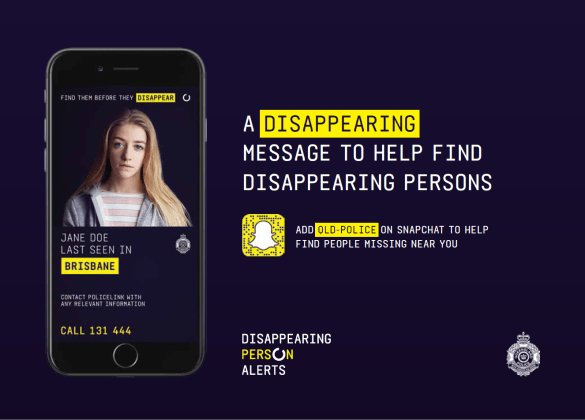
So, BWM Dentsu created a new social media tool to assist Queensland Police with missing person investigations. Sent through Snapchat, Disappearing Person Alerts instantly notify the public when someone goes missing near them.
Using the native functionality of Snapchat, the alert communicates an informative and emotive message, ‘Help find John Citizen before he disappears.’
Launched in conjunction with the 2017 National Missing Persons Week, Disappearing Person Alerts continue to be used today as a powerful policing tool.
‘Disappearing Person Alerts,’ helped BWM Dentsu Australia earn Agency of the Year honors at the 2018 Asia-Pacific Tambuli Awards held at Shangri-la at The Fort. Dentsu Aegis Network earned the coveted Network of the Year award.
The awards for ‘Disappearing Person Alerts, included In Responsible Citizenship, Humanity & Culture cluster and Gold was earned by the same campaign in Youth Brand, Humanity & Culture cluster; a Silver in Mobile, Media & Digital cluster; another Silver in Social Media, Media & Digital cluster; and a Bronze in Best Brand Idea for Good, Creative cluster.
Norovirus, or the ‘winter vomiting bug,’ is highly virulent. A vaccine to combat the virus does not exist today and the virus cannot be killed by using hand gel alone.
However, vigorous hand washing with soap for 20 seconds, as directed by U.S. Centers for Disease Control, is highly effective in preventing infection.
People are not aware of this fact. So Zantiis, an organic skincare brand, and Dentsu One Bangkok developed Clean Light Hand Soap, a soap bar that flashes for 20 seconds.
This blinking soap bar started a buzz on social media and got people talking about how long they clean their hands. Zantiis posted a video on its Facebook site to demonstrate effective hand washing, which boosted the site’s engagement rate by 1700%.
The soap bar was used as a health education tool in schools and promoted in shopping malls in Thailand.
This simple and effective product was 1 of 7 pieces of work shortlisted at the National Design Innovation Contest.
Steve Jobs said, ‘Creativity is just connecting things. When you ask creative people how they did something, they feel a little guilty because they didn’t really do it, they just saw something. It seemed obvious to them after a while. That’s because they were able to connect experiences they’ve had and synthesize new things.’
The South by Southwest (SXSW) Conference and Festival celebrate the convergence of the interactive, film, and music industries. Fostering creative and professional growth alike, I could not be happier to be back in Austin Texas. Thankyou Dentsu for allowing me to attend.
The SXSW event is very big now and some say has lost some of its intimacy, but I personally feel it still remains the premier destination for creative inspiration.
So if you are in town this week for SXSW, do message me so we can walk a tightrope between blind faith and curiosity, between expertise and creativity, between bias and openness, between experience and epiphany, between ambition and passion and between an old today and a new tomorrow.
My SXSW schedule as it stands today can be found here.
My previous SXSW blog posts can be accessed below;
Back in the days when the motor vehicle was first conceived, it was heralded as the emergence of a truly limitless means of transportation. Compared to that spirited fanfare, what is the situation like now?
In a nutshell, cities are plagued by congestion, cramped parking access, noise, and other nagging problems. There is no longer a genuine sense of freedom, or liberation, surrounding the domain of urban mobility.
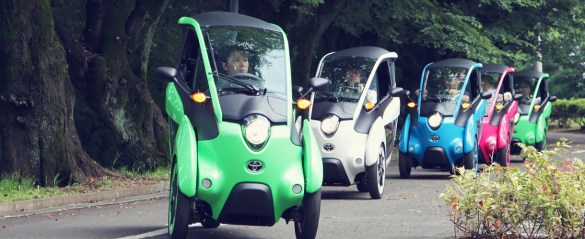
The OPEN ROAD PROJECT has emerged from such aspirations, the brainchild of the Toyota Mirai Project Department, a unit formed to explore the future of mobility.
The Mirai Project Department is a laboratory-format team, approximately ten members active, located in the exclusive Omotesando quarter of central Tokyo.
Its mission is to probe the prospects of new value for the future. The unit is engaged in prototyping not only for the cause of new mobility but also from the perspective of furnishing unique new user experiences grounded in mobility.
In this initiative, the scope of the work has been expanded to the perfection of an all-new mobility experience, envisioned to bring innovative new services onboard as well.
On the contrary, working through collaboration with Dentsu, the general public, startups, major scale corporations and other organizations, big and small that share the same vision, the goal is to instill an unparalleled degree of freedom in today’s urban mobility.
Using design thinking techniques one of the problems that were solved was parking. See the video below.
Moving ahead on the strength of constructive thinking, flexible ideas and the energy to succeed where others have failed, the Open Road Project team are determined to bring dramatic new innovation to both the realm of mobility and the future of our cities.
The next innovation in the Open Road Project was solving the electricity demands from electric cars.
Today, power is crucial for comfortable and convenient living.
But even so, constructing new charging equipment can be a mighty task. At the same time, there is plenty of electricity available in our cities.
Most all of the people living in urban areas, meanwhile, want and need to access such power. If a device could be developed to connect that power to the people who need it, clearing the way for mutual sharing of the power accessible around town, our lives and the society around us could certainly be enhanced.
SMILE LOCK OULET resolves this problem by recording data on the use time and specific users, furnishing a scheme in which customers pay only for the amounts of power they actually consume.
For outlet owners, power outlets frequently remaining idle can be used to generate revenue.
For i-ROAD drivers, the options for the charging environment can be expanded. In this way, a confident and happy tradeoff will be generated between power outlets and cash flow.
With SMILE LOCK conceived as a communications function equipped device, it carries on real-time exchanges with the server over the Internet.
Utilizing that capacity, the system steadily records use status, the identities of users, as well as how much charging is performed. This conversion to the Internet of Things (IoT) in power outlets has paved the way to the invention of this dynamic new service.
SMILE LOCK” is engineered to contribute to cultivating a society in which everyone is able to share electricity with full peace of mind. With SMILE LOCK, there is no need to install any new equipment, with use of outlets already existing around town helping to realize an easier and more comfortable charging environment for the i-ROAD.
SMILE LOOK, in other words, heralds the debut of a next-generation device crafted to realize the dream of “outlet sharing.”
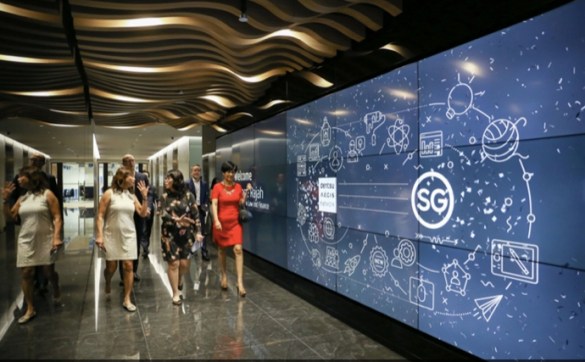
Dentsu Aegis Network today officially opened our new Asia Pacific headquarters in Guoco Tower at the Tanjong Pagar Centre. The new offices will house all our ten network brands under one roof, along with innovation labs and R&D centre: Isobar NowLab, iProspect VoiceLab, and the Global Data Innovation Centre.
With the move to the new headquarters, Dentsu Aegis Network will now be able to accommodate over 750 of its Singapore-based staff in one location for the first time. All brands were previously located in five different office locations in the central business district. This co-location will help facilitate collaboration, foster innovation, and enhance efficiency as part of Dentsu Aegis Network’s unique corporate strategy.
The new regional headquarters launch was officiated by Indranee Rajah, Singapore Senior Minister of State, Ministry of Law & Ministry of Finance; Nick Waters, CEO, Dentsu Aegis Network Asia Pacific; and Kelvin Wong, Assistant Managing Director, Singapore Economic Development Board.
The new 100,000 square feet headquarters was designed with the concept of agile working in mind. Singapore will be the first location in Asia Pacific to pioneer agile working which aims to provide a balance between work and personal needs as well as to facilitate collaboration. Agile workers also create agile organisations that are better equipped to survive and thrive in the digital economy, in line with Dentsu Aegis Network’s global push to become a 100% digital economy business by 2020.
The offices will also host Isobar NowLab, iProspect VoiceLab, and Global Data Innovation Centre to explore new emerging technologies and equip Dentsu Aegis Network with the necessary tools and capabilities to navigate through the digital economy successfully.
Isobar NowLab is a global initiative, an accelerator intended to catalyse innovation across Isobar. It provides an open and collaborative environment for the global NowLab community to share ideas and codes, build on each other’s experiments and help clients bring emerging technology and innovation projects to market. Isobar NowLab also runs hackathons, conduct R&D projects, and host permanent maker-spaces, amongst others.
Under iProspect’s global innovation series ‘Solving-X’, the agency has partnered with Google to create the iProspect VoiceLab built with Google which explores the new vocal relationship between person and machine. The experimental space currently explores how Voice technologies powered by the Google Assistant on Google Home can work for both consumers and brands. By using voice commands, participants can navigate, display and share Google data from platforms such as Consumer Barometer, Insights or Trends as well as talking to the room to control other connected devices.
Global Data Innovation Centre is the network’s first-ever R&D centre that develops and produces innovative applications and serve as a hub for data scientists and technology talent globally. First launched in 2016, the centre was built in collaboration with the Singapore Economic Development Board (EDB).
Singapore’s Industry Transformation Map (ITM) for Professional Services was also launched today in conjunction with the opening of Dentsu Aegis Network APAC headquarters. The new office was selected as a venue for the launch as the business’ success in building digital and data-led partnerships and innovations sets an example for Professional Services firms in the creation of opportunities within the digital economy.
2017 has been a foundational year for the Dentsu Aegis Craft Matters programme. The brain child of Jean Lin, DAN Global Exective, CEO of Isbar Global and fhe DAN Executive Sponsor for this program.
Craft Matters set out with a simple goal; to bring the collective power and diversity of our network together to create a truly integrated output that is enabled by technology, empowered by an ecosystem and seamlessly connected through design.
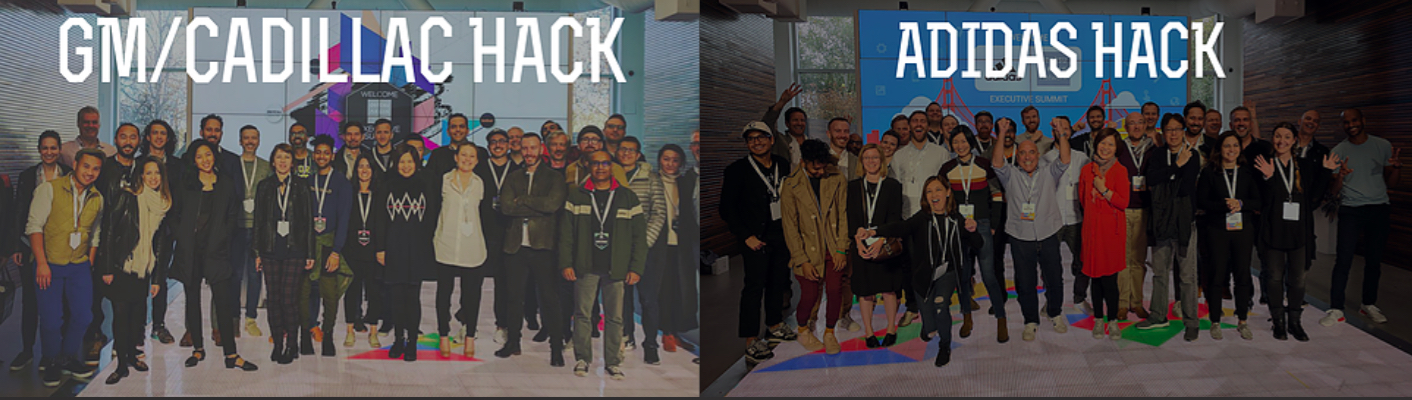
In 2017, the inaugural global DAN Creative Hack in March October in California with some of our clients. The class went on and did five local hacks including the one in Singapore.
At each event during the year, we bonded and worked up some indeed groundbreaking ideas that demonstrate how Dentsu Aegis Network is in good shape and has the right people to disrupt and innovate the creative industry with an original global offering that is built for the digital economy.
We are just at the start of the Craft Matters journey, and 2018 will will see DAN continue to empower our creative communities to evolve our creative process, capabilities, and solutions with the right tools, methods, and partners.
I want to personally thank Jean and my fellow class members for there passion, the individual contributions everyone made to Craft Matters by the DAN community made it a pure delight to be part of it.
Here’s the Class of 2017!
The first ever three-day Global DAN Craft Matters Workshop. Thirty leading creatives from across Isobar, McGarrybowen, Firstborn, MKTG, 360i, and Dentsu met in Silicon Valley to work with our Global Media Partners, Snapchat, Google and Facebook as-well-as network and discuss priorities for 2017
As the curtains draw on 2017, businesses need to begin planning ahead for the upcoming year. With constant changes in geopolitical landscape, technological breakthroughs and stakeholder expectations, businesses cannot afford to rest on their laurels with stagnant business models.
Planning ahead may be a daunting task, but Canon Asia Pacific leaders got together to create the Think Big Leadership Business Series with an aim to provide clarity for over 700 attending business leaders, through a whole host of respected leaders in both commerce and academia sharing their perspectives on 2018’s projections.
Aptly themed Outlook 2018, this convention took place at the Grand Ballroom of the Grand Copthorne Waterfront Hotel in Singapore, on the 21st and 22nd of November 2017.
I was invited to join the program with a focus on Digital Transformation working with Canon Mailcom Malaysia Sdn Bhd’s Mr. Chris Martin, Océ Technologies B.V. Netherlands’ Mr. Joost van Rooij, Zalora Group’s Mr. Parker Gundersen & LinkedIn’s Mr. Stewart Lee.
Topic:
Tech vs Humanity: Keeping the Human Touch Alive in an Automated World
Synopsis:
Robots, artificial intelligence, computerized algorithms, machine-to-machine communications, and autonomous vehicles are here and transforming human life.
Despite how digitisation and technology have become an integral part of businesses, people are increasingly craving for the human touch of personalisation, from product customisation to simply having someone willing to walk through and understand their customer’s needs.
What are some ways businesses can find a happy medium between technology and human interaction to ensure a satisfactory buying experience is not lost?
Moderated by NTU’s Chief Development Officer, Mr. Victor Tay.
Panelists:
Adam Good, Chief Digital Officer, Dentsu Brand Agencies, APAC, Dentsu Aegis Network
Parker Gundersen, Group CEO, Zalora
Stewart Lee, APAC Head of New Business, LinkedIn
Ryan Huber, Managing Director, Huber’s Pte Ltd
Ewan Sou, Founder and Managing Director, Instantly
I have joined the Australian Transformational Management Program run by the Australian National Univesity (ANU) developed in conjunction with the Australian Transformation and Turnaround Association (AusTTA).
I was delighted to be invited by the Chair of AusTTA Adam Salzer to attend the program that designed by leading international scholars in the fields of organisational behaviour, change management, and project management to give the group chosen the confidence and skills to stretch yourself beyond your current boundaries as agents for transformational change.
Last month on September 8th fellow participants, faculty members and project sponsors held a launch session at the Allan Barton Forum at ANU to meet each other and whet the appetite discussing megatrends, the role of the projects/case studies and evidence-based management. The dinner that night at Boffins Restaurant in University House was just as rewarding.
The ANU Transformational Leadership Program now has a core goal now and a set of resources that ANU’s Research School of Management team can deliver too.
The AusTTA believe leading transformation is a rapidly evolving field. To unlock future opportunities and transform existing organisations, change leaders must be able to contend with a volatile and rapidly changing macroeconomic environment, unprecedented technological disruption, legacy systems and processes as well as my personal favourite resistant organisational cultures.
The Australian Transformation and Turnaround Association, the ANU Transformational Leadership Program has been built around the ANU’s unique evidence-based approach to management capability development.
The aim is to ensure that participants have the skills and knowledge to solve today’s change problems, and the capabilities to collect and synthesize the best available evidence to respond to future transformational challenges.
By the end of this program, the participants will receive new thinking, skills to:
Provide pragmatic, evidence-based Board-level advice to maximise the benefits and minimise the distress associated with fundamental transformations;
Design and lead complex transformations using cutting-edge theory, tools, and models to effect change in complex organisations;
Effect culture change in support of transformation and sustainable agility; and
Establish efficient governance structures and controls in favour of change initiatives.
I’m looking forward to the contribution I can make over the coming year.







 The offices will also host Isobar NowLab, iProspect VoiceLab, and Global Data Innovation Centre to explore new emerging technologies and equip Dentsu Aegis Network with the necessary tools and capabilities to navigate through the digital economy successfully.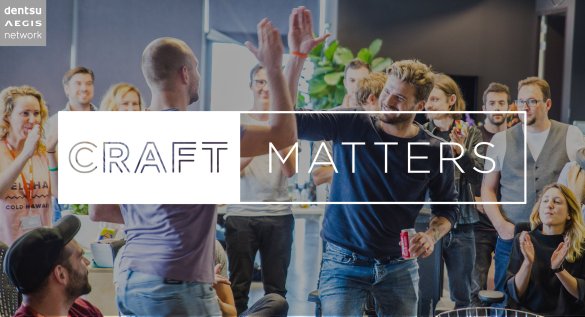







 A journal by Adam Good