 South by Southwest (SXSW) is a set of film, interactive and music festivals and conferences that take place every spring in Austin Texas.
I decided with this approach I would be able to find the story tellers focussed on using transmedia techniques. Transmedia is a form of storytelling delivered across multiple platforms and channels over time. It’s more than just integrating online and offline experiences. It’s about dispersing the story systematically across multiple media, each making their own unique contribution to the whole.
And when done right, transmedia puts a story and message on surround sound with the audience participating right in the middle.
Image sourced from NM Incite, a Nielsen McKinsey company
I thought if I was focussed on finding well crafted transmedia content examples I could navigate the hundreds of talks on offer.
What I found over the six days were some talented people developing unique content for the right channel, and on the right screen at the right time to enhance the content story and advance the users purpose to change behaviour.
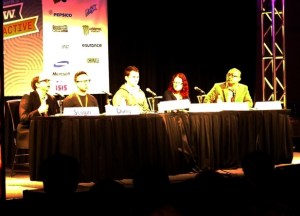
Panelists –
Walter Werzowa, developed mnemonic for Intel.
Greg Johnson, Creative director for HP
Robin Lanahan, Director of design and brand strategy, startup business group, Microsoft.
Brands today exist in multiple mediums, defined by multiple voices. The media brands inhabit is iterative, with no beginning, no end, and little permanency. In that context, adherence to a big idea and endless repetition of centralized, fixed rules can make a brand seem unresponsive and out of step with its audience. But without repetition, how does a brand create consistency? And without consistency, how does a brand maintain value?
The pattern language should also always follow a consistent story. While the channel and goal of the communication may change, a tightly defined story framework, and an ownable pattern language, can convey a focused brand.
The power of patterns as a branding element was best demonstrated by Walter . He illustrated, by breaking down Beethoven’s Symphony No. 5, that repeating the same series of notes would be boring but varying the basic motive resulted in emotion and engagement. With brands, as in music, one needs the right combination of what is expected and what is new to convey an engaging message over time.
The talk slides are worth a look.
Talk 2: Future of Entertainment: Viewer Becomes User

The Code is a BBC documentary about Professor Marcus du Sautoy’s search of a mysterious code that governs our world through numbers, shapes and patterns. It’s also a next-generation transmedia treasure hunt aimed at all ages and abilities that takes place online through games, puzzles, Facebook and Twitter, in the real world, and in Lost-style clues hidden within the TV show itself.
The Code is one of the most ambitious ‘native transmedia’ projects ever created by the BBC and Six to Start, and it demonstrates what’s possible when a broadcaster with the reach, reputation, and quality of the BBC meets the breadth and depth of engagement that the web can provide.
Talk 4: Top Chef: How Transmedia is Changing TV
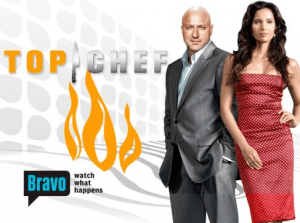
Dave Serwatka, Bravo’s Vice President of Current and Cross Platform Productions, chose one of Bravo’s flagship shows, Top Chef, because he believed it was an ideal choice for Bravo’s transmedia initiative. Top Chef employed the mediums of internet webisodes (with their online show Last Chance Kitchen), responses through Twitter with assigned hashtags that were broadcasted on air, and traditional television.
Henry Jenkins from Fast Company wrote an excellent article on the ‘Seven Myths About Transmedia Storytelling‘. Also Time Magazine wrote a wonderful story on the talk, follow the link here
Talk 5: The Wars of Tech


End



 The
The 




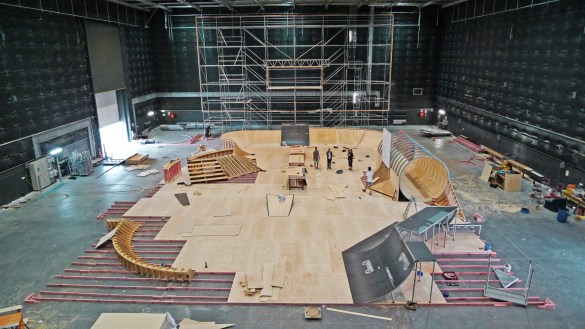
 In New Zealand, Mountain Dew is still in its infancy with only one national advertising campaign pre-dating this.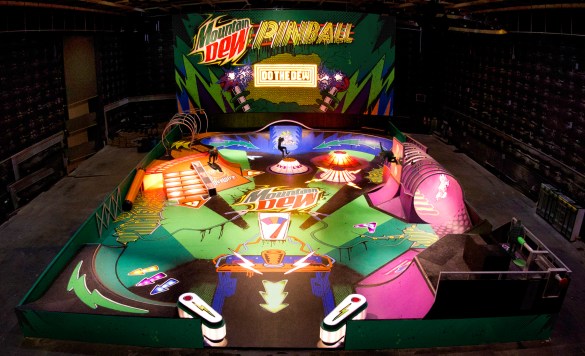
 A journal by Adam Good