As a Chief Digital Officer (CDO) I live every day at the intersection between technology and culture and how it drives change in a company or organization.
The powerful breakthroughs in computing, smartphones, and telecommunications have seen massive adoption of broadband, mobile, and e-commerce systems, resulting in a real-time buy and sell channels that have changed customer experiences forever.
How a company moves to embrace the opportunity, I tend to first look at the company culture.
Companies born in the pre-digital era always need much more adjusting or shift in their organizational culture to keep up with today’s digital disrupted world.
Company culture reflects an organization’s deepest and most tightly held beliefs and values. Those beliefs and values have had years and often decades to become deeply entrenched and often played a significant role in why the organization reached its level of success in the first place.
Thinking these beliefs and values can be easily changed is a fool’s errand.
As a CDO I am regularly tasked with moving companies into the digital age via newly created customer first strategies, go to market programs and mobile first engagement platforms.
With this role, I have often underestimated an organization’s ability to change quickly and get surprised with a push back when the culture rejects the new way of doing things.
Frankly, it depends greatly on what business vertical and industry I have been being invited to operate a digital transformation within.
If it is an industry with a short fuse, big bang disruption like travel, finance, retail, professional services, media, and telecommunications. These industries like our very own advertising industry are seeing the explosive and immediate impact on traditional business models.
The company resistance to embracing a digital transformation is often culture driven as their deepest soul still thinks the old days of working are still more relevant than not.
Big bang digital disruption is a force that rocks the foundations of a business and many times over I see the management teams while seeing change coming were not prepared and or willing to adjust and invest quickly enough.
Other times I find myself operating in a vertical grouped where a longer fuse, big bang digital disruption is occurring, and here you find applying digital transformation strategies, tends to move towards cost efficiency to be the key drivers. Industries such as auto, FMCG, education, health, transport, agriculture and utility sectors.
While all industries are being disrupted because of the Internet, you need to call on all your experience to drive the right amount of velocity to apply to the proposed transformation assignment, so the customer engagements paths and new revenues proliferate rather than become restricted because the disruption has taken a front seat.
These velocity decisions impact how tasks are conceived, led and resourced and in many cases how you recommend culture change management on how to nurture the digital transformation program.
The understanding of how this works results in many new and exciting ways to engage with customers. Especially thinking on a global scale, rather than the traditional local market level which often conflicts with many organizations operating structures.
Digital transformation should always look for programs that increase automation and gather and analyze unprecedented amounts of data so they can stay relevant in a competitive global market.
While cost efficiencies are necessary strategies, the digital transformation program must have the core goal to deliver customer acquisition, engagement, and usage. The program should be developed to have milestones on customer interaction. The program should look to be finding constant improvements. In the early days, it is about the test, learn, implement and scale quickly.
This combination means there are a vast array of capabilities and skills required to stitch together a large-scale audience led digital transformation and ultimately Dentsu Aegis is well positioned within our various agency capabilities to lead clients.
I find the leader of a digital transformation program must have a clear customer-centric upbringing. Ideally spent their entry career creating compelling stories across many different types of media channels, and were brought up on design thinking approaches and techniques, that can then be fused to screen customer first approaches, tracked to agreed business models and defined audiences and financial plans. Yes, you need to be able to communicate and action all of this to have a successful digital transformation agenda.
A find the leader of a digital transformation must also have a passion for the arts blended with a scientific method mindset to use the tools of the day, but also be innovative always to be looking ahead to find an edge.
Successful digital transformation approaches often start a life launched from innovation labs. As a CDO I find digital transformation strategies should be ‘story told,’ must always be mindful and have an understanding these stories impact others. Their client’s staff, their friends, and their customers.
I also find it essential to communicate the understanding of what drives a new culture as well as the opportunity. Culture always trumps strategy, so any digital transformation strategy has to be collaborative at all times seeking out digital artisans and change agents for both the client, the agency/service provider and the end customer.
To bring to market a digital transformation program I find a successful technique is to foster a partner ecosystem for co-innovation and co-creation. The team that is created for the assignment must also give the project leads and middle managers latitude to fail fast so they can learn even more quickly.
In summary, it’s not the technology that drives change, but rather companies don’t allow legacy culture to slow down a digital transformation in a fast-moving digital economy. That is, companies must become disruptors or risk being disrupted.
Companies need a culture of speed, agility, innovation, constant learning, and mindfulness.
As mentioned in a previous blog Uniqlo a Japanese casual wear designer, manufacturer and retailer takes customer experience both in the real world and digital channels very seriously.
In planning and designing all aspects related to its store experiences, the company adopts the Japanese concept of kaizen, which translates to mean a continuous search for perfection and is now beefing up e-commerce operations by carefully repositioning itself to appeal to a wider, more multicultural set of consumers but without losing its ‘Japanese-ness’ – a quality that can be glimpsed as much in the technologically hip way it communicates with shoppers, as in the discipline of its clothing designs.
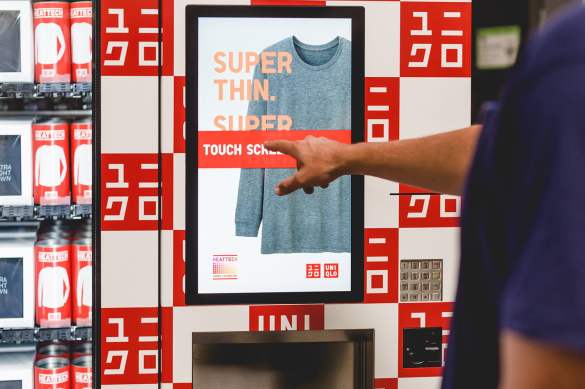
Heattech tops and UltraLight down jackets are two of Uniqlo’s big sellers, items that represent the brand’s style of simple but highly functional clothes. And now they’ll be sold in one of retail’s simplest and most functional of venues: vending machines.
Vending machines are cheaper to operate than physical stores and are a convenient way of selling basic, travel-friendly clothes to harried consumers.
The first Uniqlo To Go machine goes live this month and Uniqlo will roll out nine more of the machines at airports and shopping malls around the US, this month.
The machines have a variety of colors and styles for women and men, changing with the seasons and local customer needs, and dispensed upon purchase in small boxes or canisters.
The airport locations are especially fitting for the brand’s signature thermals and jackets, which are designed to be thin but warm and easily packable.
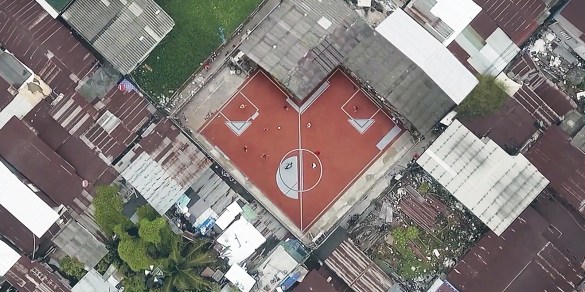
The world’s first non-rectangular football field has been constructed in the community of khlong toei, a densely populated area of Bangkok, Thailand
The project, which includes a series of play areas, seeks to demonstrate that otherwise vacant asymmetrical spaces can be utilized for outdoor recreation.
The scheme has been developed by AP Thailand, in collaboration with CJ worx, who hope that the project will help enhance relationships among the people in the community. The ‘unusual football field’ is an unorthodox setting that redefines the boundaries of the traditional 105 by 68 meter rectangular football pitch.
The concept originated from an idea called “Think Space,” with the goal to transform a small and irregularly-shaped field into a practical football field that still allows fair play between teams. The idea questions the limits of space in order to illustrate our brand’s belief that “Space can change one’s life.”
The Unusual Football Field was developed in Khlong Toei community, a highly populated area in Bangkok which is believed to have no usable space left. However, in reality, there are numerous asymmetrical spaces scattered across this district.
AP Thailand decided to design a field for playing football, which is the most favorable sport in Thailand, in order to promote relationships among the people in the community. This unusual football field has proven that designing outside boundaries can help foster creativity used to develop these useful spaces.
The work was submitted in Cannes Advertising Festival thus year and Thailand won its first Grand Prix award ever. It won the Gran Prix in the design category.
“The vision to break the norm or what is possible with an abandoned space—it’s very clever,” said Sandra Planeta, Design Lions jury president and founder of Planeta Design in Sweden.
Planeta said she and the other jury members spent a great deal of time discussing the concept of design in the process of selecting the Grand Prix winner and really looked at the power that design has to influence culture. “The Unusual Football Field” was a perfect example, she said.
“We wanted to pick a piece that shows the best qualities of our category and what design can deliver,” Planeta added. “And that piece was touching so many points. It’s breaking the grid, it’s doing something unusual, it’s so smart, it’s simple, it’s human, it’s bold. It really contains all the ingredients we’re working with. All 20 of us [on the jury] want to go back home and create different football fields.”
Dentsu Inc announced today that Dentsu Group companies (Dentsu Inc., Dentsu Young & Rubicam (Tokyo), Drill (Tokyo), Dentsu Taiwan (Taipei), Taproot Dentsu (Mumbai), BWM Dentsu (Sydney, Melbourne), AC mcgarrybowen (Mexico City), Flock (Mexico City), NBS (Rio de Janeiro) and Dentsu Latin America (Sao Paulo)) were awarded a total of twenty-eight Lions (one Grand Prix, one Gold, seven Silver, nineteen Bronze) at the 64th Cannes Lions International Festival of Creativity (June 17-24), Lions Health Festival (June 17-18), Lions Innovation Festival (June19-20) and Lions Entertainment Festival (June 21-22 held in Cannes, France. This year saw a total number of 41,170 entries received from around 90 countries across the four festivals.
The Dentsu Group Grand Prix and Gold Lion winner was “The Family Way” for Recruit Lifestyle Co., Ltd in the Mobile category.
A little closer to home in Asia Pacific, Dentsu Brand Agencies with 7 Lions for Direct, Design, PR, Outdoor, Radio, Entertainment and Health & Wellness. The wins include 3 Silver and 4 Bronze Lions across 5 countries: Dentsu Brasil and Dentsu APAC offices – Taproot Dentsu Mumbai, BWM Dentsu Sydney, BWM Dentsu Melbourne, Dentsu Taiwan and Dentsu JaymeSyfu Philippines.
Taproot Dentsu Mumbai’s “Adidas Odds” won 2 Silver Lions, one for Direct, one for Design and a Bronze Lion for Health & Wellness. The work was also shortlisted for Titanium, Film, Promo & Activation and Health & Wellness.
BWM Dentsu Sydney’s “Premmie Proud” for BabyLove got a Silver Lion for PR.
BWM Dentsu Melbourne’s “Tailor Made Store” for Chadstone clinched a Bronze Lion for Outdoor/Ambient Experiential & Immersive Digital.
Dentsu Taiwan’s “Single Belief” for Glenlivet won the agency’s first Lion (Bronze) for Entertainment. This was a Grand Prix winner at AdFest.
Dentsu Brasil’s Speed – O – Track for Arteris won a Bronze Lion in Radio.
Since opening its first restaurant in Tiananmen Square, Beijing in 1987, KFC has expanded its franchise to a total of over five thousand locations all across the country and become the largest restaurant chain in China.
KFC’s success in China can be attributed to China’s favorable reception of the company’s irresistible Original Recipe yet; there’s much more to the story of Colonel Sander’s triumph in the east.
Unlike the traditional model of KFC outlets in the United States and other developed markets—a limited menu, low prices, and an emphasis on customers opting for take-out—KFC operates in China with the purpose of serving the local needs.
In other words, Yum! Brands, the restaurant company that owns KFC and other chains such as Pizza Hut and Taco Bell has structured its business model through the process of localizing the product and focussing on customer experience and the dining experience.
KFC’s launched a new brand proposition called “Be You” in 2017. The brand aims to offer consumers the pleasure of being entirely natural as they are suported by an instore fully digital process and supporting entertainment, consumers can manage and enjoy a new dining experience on their terms.
The primary target consumers of KFC is young adults. They rely heavily on the Internet and their mobile devices and constantly look for new experiences.
KFC partnered with Dentsu Aegis Trio Isobar Shanghai China office and Baidu to design the process to accommodate Chinese interests and behavior and create a whole new interactive dining experience in the restaurant. From ordering, waiting to dining.
The idea is called “Dumi” a Voice-Controlled Robot and self-help ordering kiosk. Consumers can order their meals by talking with a voice-controlled A.I. Robot to avoid the waiting lines.
Dumi’s voice recognition is sophisticated enough to handle customers changing their orders and making substitutions by “learning” from its interactions, but its makers admit the robot has trouble distinguishing between certain dialects and accents.
For the ordering Kiosks, Isobar designed a stylish appearance, and user interface was focusing on a more convenient ordering process. Customers can pay for their purchases on their phone using mobile payment services such as Alipay, Tenpay, and Baidu Wallet. Furthermore, the concept store has a wireless charging station for mobile phones that also doubles as a music listening station which can be accessed through a QR code.
There was also “Smart Music Tables” created to leverage KFC’s owned media platform “K-music”. Consumers can recharge their cell phones wirelessly, and they can also scan a QR code to listen to the music of their choice from K-music to create an interactive dining atmosphere.
This new KFC digital dining experience became the highlight of the grand opening of KFC’s 5,000th restaurant. It has gained over 600 new articles from various media outlets and created great discussions on social media which in turn as driven many consumers to the restaurant to explore and play in the KFC digital dining experience. Congrats Isobar and Baidu.
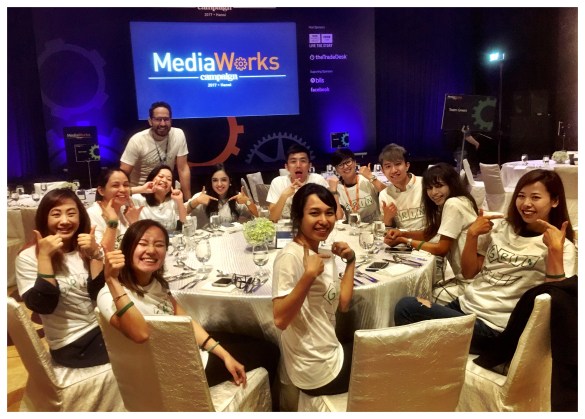
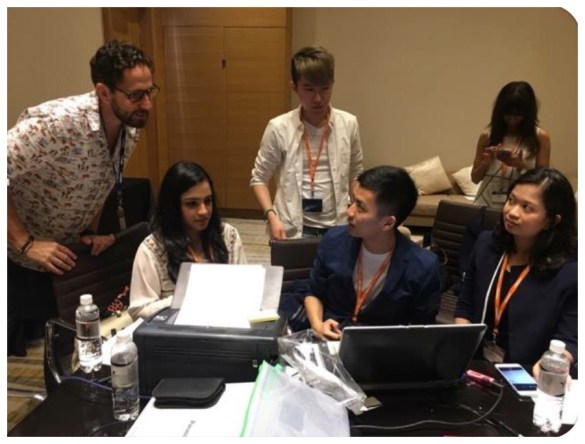
This week I was asked to be a mentor at an industry program called MediaWorks hosted in Hanoi.
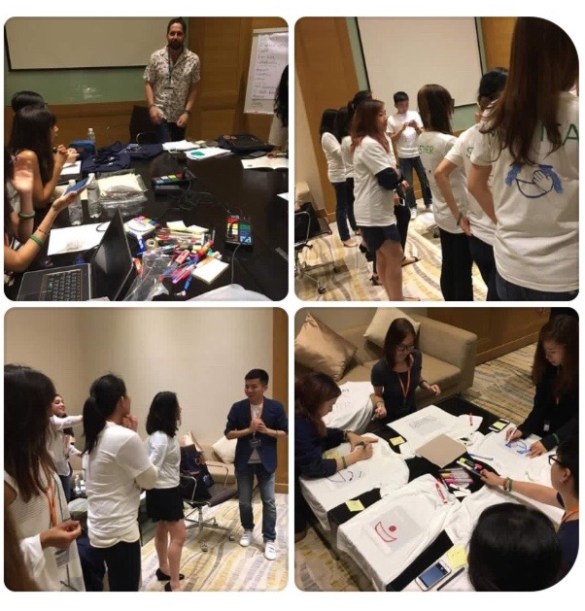
Mediaworks now in it’s 12th year is designed to test the newest batch of rising stars in the media and communications industry. The bootcamp-style workshop is an intense and uniquely rewarding learning experience featuring a 4-day course designed to challenge young talent to think quickly and creatively execute their ideas as a team.
MediaWorks replicates real-life scenarios, tasking syndicate teams to pitch to a real client on a real brief. As part of the workshop, MediaWorks incorporates a one-day conference that gathers industry leaders and professional trainers to examine practical applications such as obstacles facing the next generation, strategies for winning pitches and how to encourage creativity while delivering the client’s objectives.
As a mentor our role is to imbue young talent with skills and practical experience to thrive in media roles. It’s best described as part vocational bootcamp, networking hub, and conference, with the added flavour of a tense reality-TV challenge.
This year’s MediaWorks drew nearly 80 delegates, representing 25 organisations from across the Asia Pacific region. Separated on arrival from colleagues and placed in one of eight colour-coded teams, they were assigned their mission; to research, craft, and pitch an enticing and—more importantly—viable media strategy for a client in less than sixty hours.
One notable feature of MediaWorks is that each edition invites a different client to present a unique brief. This year that duty was taken on by Seraphina Wong, APAC executive director for brand management and advertising at UBS. Defying expectations, the brief wasn’t for an established brand, but instead a startup company in an extremely niche market.
It was an extremely rewarding experience bringing a group of people together from around the region who don’t know each other to quickly form a team and transform into a high performance team. It opens your eyes up to the talent we have in our industry and gives me reassurance for it’s future. It is not for the faint hearted or for people that love their sleep.
South By Southwest (SXSW) unites more than 30,000 attendees from over 80 countries, celebrating and helping creative people from the interactive, marketing, technology, film and music industries achieve their goals.
This was my fifth year attending SXSW, and it continues to prove to me that the most unexpected discoveries happen when diverse topics and different people from different backgrounds come together.
South by in my mind remains the premier destination for creative inspiration. My previous SXSW blog posts can be accessed below;
SXSW 2017 like previous years had over 16,000 talks, panel sessions, showcases, screenings, exhibitions, mentor sessions and a variety of networking opportunities to choose from.
The key is deciding well ahead of time what larger inspiration and meaning you intend to bring back. I find the best way to do achieve this is to reach out and follow the people coming to the event who you believe you can learn from. Turning up unprepared and making decisions on the day based on wacky click bait program titles can make your day feel very overwhelming and ultimately you are not going to get the best learning experience.
My SXSW 2017 schedule for the week can be found here.
Things I learned at SXSW 2017
Mix Reality over Virtual Reality and Augmented Reality story telling is starting to develop, but the headsets are still not fashionable enough…..yet.
You can’t go to SXSW and not spend some time in virtual reality (VR) as it was everywhere again this year and will be for many years to come. Each year, the gathering of tech-film-music enthusiasts highlight virtual reality/augmented reality and now mixed reality technologies that seem to be on the brink of widespread use, but never quite get there was pushed along in 2017.
I still don’t know a single person who spends an hour a day in VR. So I tend to believe VR is currently suitable for gaming and general entertainment first but if used for the brand experience I think it’s best to develop stories in Mix Reality (MR) to enhance in-store, or real world events rather than a customer being at home using a VR brand experience. This will of course change as headsets improve.
This year, for the first time in its thirty years plus history, SXSW organizers created a “Virtual Cinema,” where VR/AR content creators could show off the latest innovations at the JW Marriott.
I liked the VR production from INITION, a London-based production company specializing in 360-degree and VR/AR. There were showcasing “Spatium,” a VR piece which celebrated the sculptural qualities of Philip Treacy a designer renowned for creating hats that appear to defy the possible. Maybe best known for his millinery creations for Madonna or Lady Gaga.
When seen from the front, Philip’s hat appears flat yet the more you explore, the more you find a more elaborate form. When struck with the light it appears to glow. These attributes are given scale to create a fantasy building of light and shadow where surfaces change as you navigate them.
In VR experience the hat becomes architecture where the limitations of the physical no longer apply, conjuring discovery and wonder. “Fantasy hats give you the possibility to dream,” said Philip Treacy.
Probably the best talk on VR, AR and Mixed Reality from Jake Lee-High an artist, creative technologist, and CEO of Future Colossal based in NYC. H is talk was titled Holens Magic Leap and Making the Mundane Magical and featured a number of Future Colossal immersive experiences produced for brands such as BMW, Showtime, JayZ, Warner Bros, Microsoft, and Citibank
He outlined some clear advantages for Mix Reality over VR. The main one is no isolation or unobstructed sight feeling safe to navigate your environment which makes it a much more human experience.
Directional speakers was also an important element and having the sound down to the ear so that you can hear the real world combined with augmented sounds.
The clear glass and being to see the real world was the most important reason why AR and Mix reality will grow as an industry must faster than VR over the coming twenty four months.
As for Mix Reality head sets there are many but the five I ried and thought the best at the momeht are listed below;
Microsoft Hololens is the best on the market, and I am a big fan of their gesture capabilities. It containing more computing power than the average laptop, no wires, external cameras, or phone or PC connection required, you can move freely and self-contained.
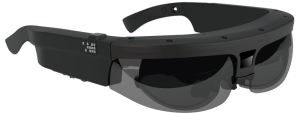
ODG R-9 powered by the Qualcomm Snapdragon 835 chip is cool. Like the Microsoft HoloLens, this head piece has six-degree-of-freedom tracking, so you can place digital items in real space instead of just slapping a flat overlay across the world. It’s expense at over $1,500US price but is headed in the right direction regarding a fashion piece.
Daqri is also a good device although a little ugly to look at. The Los Angeles-based startup Daqri originally developed with a specific demographic in mind—blue-collar workers. The Daqri Smart Helmet was developed to help make the lives of onsite engineers, construction workers, and technicians easier with an Android-powered hard hat, complete with an array of sensors.
Meta2 has great hand tracking support and very good field of view. While on the one hand, it’s far cheaper than HoloLens at $949 compared to $3,000. On the other, its images look less convincingly real, more like a projection than a solid object. It’s tethered to a computer, not self-contained which has big limitations.
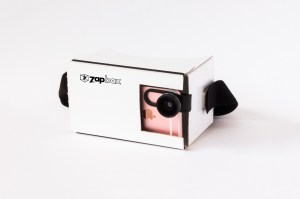
Zapbox is an impressively low-cost option. The Google card box of Mix Reality. It was originally launched on Kickstarter and an affordable way to experience mixed reality and room-scale virtual reality using the power of your smartphone. It uses the phone camera pass through to display virtual objects on top of the real world, but even more impressive is that it uses a pair of handheld controllers that let you interactive with these virtual apparitions.
The biggest advantage for Mixed Reality are the practical applications that can be developed. It will grow in use and not be just be another advanced gaming console in my mind. Instead, it will add a whole new world of interactions, apps, games and experiences we have yet to imagine.
A hybrid of both AR and VR, Mixed Reality (MR) is far more advanced than Virtual Reality because it combines the use of several types of technologies including sensors, advanced optics, and next-gen computing power.
All of this technology bundled into a single device will provide the user with the capability to overlay augmented holographic digital content into your real-time space, creating scenarios that are unbelievably realistic and mind-blowing.
A few limitation of Mix Reality (as of now) is the field of view, and this needs to be addressed but the content I saw it didn’t bother me that much once you got used to it. Sunlight is a problem, as it doesn’t work outdoors to well. Processing and battery life and of course fashion the biggest issue that needs to resolved. The manufacture that brings a fashionable earwear peice, that links to your smarphone has a hand controler capability is going to super charge the industry.
But while there are, limitations the future is bright, especially with the faster wireless transmission on its way. When you experience Mix Reality on a 5G connection it means cloud-based process and rendering will be doing all the heavy lifting.
There were many Mix Reality examples at SXSW but still the best video on the topic is the Ted Talk done from Microsofts Hololens Creator Alex Kipman.
Digital off screens and into real world items are moving fast and becoming practical and fun experiences for creative ideas.
When you see digital tech beginning to integrate into real world items as well as becoming fashion wearable you can start to see how our digital lives are on the edge of another radical shift; new forms of technology are decoupling digital functionality from consumer electronics.
Connectivity and digital interaction are being integrated into those familiar objects from hats to clothing, furniture, cars, buildings – creating the opportunity for seamless, discrete interactions that reduce our reliance on any single device.
Google ATAP Technical Project Lead Ivan Poupyrev and Levi’s VP of Innovation Paul Dillinger talk Beyond the Screens: the Ubiquity of Connectivity spoke about moving beyond smart gadgets to a future when our entire world is intelligent and interactive.
They went deep into the Levis and Google partnership and what they learned developing the Project Jacquard platform.
Called the Commuter, which uses Google’s Jacquard technology to turn its denim fabric into a gesture-controlled canvas.
On the talk, Google and Levi’s revealed that the smart trucker jacket will arrive this Autumn in the USA for $350. The Commuter comes with a Bluetooth cuff that pairs with a smartphone to let you get directions, adjust the volume on your music or answer a phone call — all triggered by finger swipes on the jacket’s fabric. Some people said it was the Google Glass of jackets. I think it’s a much better attempt of focusing on fashion first over tech.
Another interesting talk on digtial in the real world items was “Making Music Physical Again” by Dr. Kate Stone from Novalia.
She is a creative that adds interactivity in the form of touch and Bluetooth to printed surfaces. Kate talked about being physical again, the fusion of physical and digital requires a focused design service skill set to create immersive interactive experiences.
Kate spoke about the power of physical print with a musical digital soul and went about sharing stories of these achievements and put forward a vision for the future of interactive experiences with everyday things.
For example, McDonald’s turned their placemats into music production tools, Bootsy Collins played bass on a paper note book and Budlight turned a wall in Brazos Street into a 50 ft long musical experience at SXSW all using her inventions.
The world’s first working DJ turntables made from a pizza box using grime DJ P Money and Rinse FM’s DJ Vectra. Despite being made mostly out of cardboard, the box features two decks, a cross-fader, pitch volumes, cue buttons and the ability to rewind music.
The playable DJ decks also sync via Bluetooth to the user’s smartphone or laptop with DJ software such as Serato. Using conductive ink, users can mix, scratch and release their inner DJ by tapping and sliding their fingers over the controls.
To make your dreams you had as a child come true requires passion of course, but you also need to be one step ahead of today’s technology and consumer trends.
Fresh off the successes of “Rogue One: A Star Wars Story,” director Gareth Edwards gave an SXSW keynote to discuss how he got his start in filmmaking. In a very powerful, funny, and above all inspiring talk, Edwards recounted, step by step, how he went from for-hire VFX artist to his awesome 2010 feature debut Monsters and from there into a galaxy far, far away.
As a kid, Gareth had a dream he wanted to join the Rebel Alliance and destroy the Death Star like the heroes in the movie, but soon learned that this was impossible. Or was it?
Zane Lowe, Creative Director of Apple Music’s Beats 1 Radio, give a wonderful address at SXSW. A New Zealand-born radio DJ, Live DJ, record producer, and television presenter, Lowe is now the Creative Director and LA Anchor for Beats 1, Apple’s first free global radio station broadcasting 24/7 to over 100 countries.
Zane recapped his life, career and musical philosophy that was crisp, polished as well as a great example of how to do a talk aided by video stills and plenty of musical snippets.
Lowe told the packed room that he “never had a choice” about going into music industry; “It was my passion”. It may have been his passion but how he went from a kid in Auckland loving his first album from Tom Petty & the Heartbreakers’ to the heights of the music industry was his ability to read the trends in technology, and now it impacted his industry of his career choice.
As technology has made it possible to have facetime with co-workers even from miles away, companies around the globe are finding ways to accommodate mobile employees. Some 80% to 90% of the US workforce for example say they’d like to work from home at least part time, according to the latest research from the firm Global Workplace Analytics.
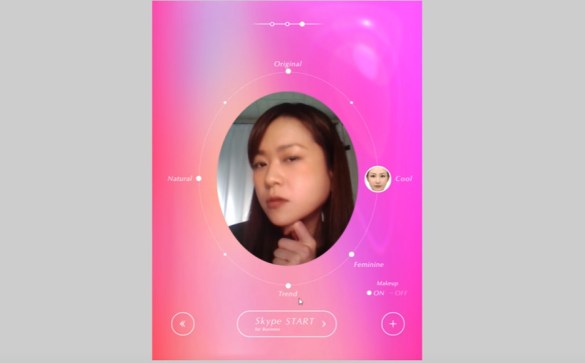
Shiseido, in collaboration with Microsoft Japan has developed “TeleBeauty”, an app that automatically calibrates skin tone and applies digital makeup to the face during video-conferencing.
The aim is to support women who actively pursue their careers remotely, be it from home or otherwise, and consider cosmetics part of their image management.
With the technical assistance of Microsoft Japan, Shiseido has developed a trial model of this app for “Skype for Business”.
With today’s progressive diversity of work styles, “teleworking”, a flexible way of performing duties regardless of the time and place, is spreading fast.
Many people take advantage of this style in order to achieve greater business efficiency or to circumvent locational restrictions when, for example, providing child and/or elderly care.
Noticing this trend, Shiseido conducted a survey among telecommuting women. The results revealed a feeling of annoyance with having to apply makeup for one or few online meetings while working from home. They also expressed that they don’t like their personal and private space being seen through the monitor and that sometimes, due to camera quality or room lighting, they feel uncomfortable with the appearance of their skin on the screen.
“TeleBeauty” has been developed based on insights Shiseido has gained through its long experience and work in the industry. Experience gained through makeup techniques owned by Shiseido artists, makeup simulation technology developed by Shiseido R&D (proved at the stores since 1999), and trend information.
In addition to its main feature of applying makeup, the app can also correct the skin tone and blur the background. As the makeup smoothly follows the user’s facial movements, it is hard to guess that it is a simulation and not real makeup. This easy-to-use app saves the telecommuters both time and effort.
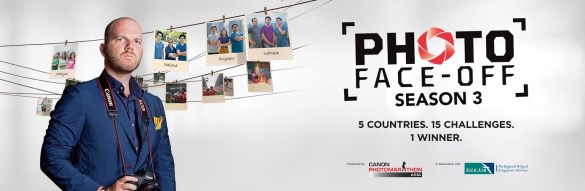
Photo Face-Off is a competitive photography reality TV show pinning amateur photographers across Southeast Asia against each other and resident professional photographer Justin Mott. Presented by Canon Photomarathon Asia on the History channel.
Hosted by Asia’s own Kelly Latimer, Photo Face-Off now in Season three is presented by Canon Photo Marathon also features a welcome return to the screen for the pro photographer that everyone loves to beat Justin Mott.
Across 5 one-hour episodes’ viewers are treated to a whirlwind tour around some of the region’s most exotic locales as the show pits three local amateurs from each country against each other, and of course Justin, in a bid to grab the single spot available in the season’s Grand Finale in Vietnam.
Traveling from Singapore to Kuala Lumpur, Bangkok to Yogyakarta each episode features three decidedly difficult photo challenges – Speed, Theme and Face-Off – all designed to push the contestant’s skill, knowledge and creativity to the limit.
The Grand Finale, in the stunning city of Da Nang will see four ‘Champion of Champions’ and a very special Vietnamese ‘wild-card’ snapping and scrapping it out in one final ‘Face-Off’ for a chance to win exclusive Canon prizes and the crown of Photo Face Off Champion.
Putting the snap back into photography, Asia’s leading photo-competition is both sharp and colorful and a wonderful piece of branded content.
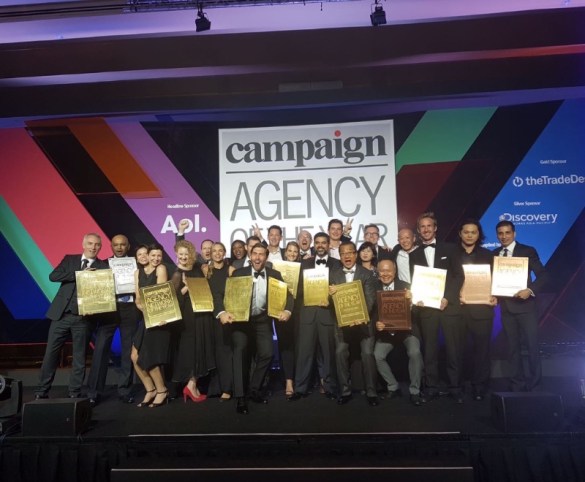
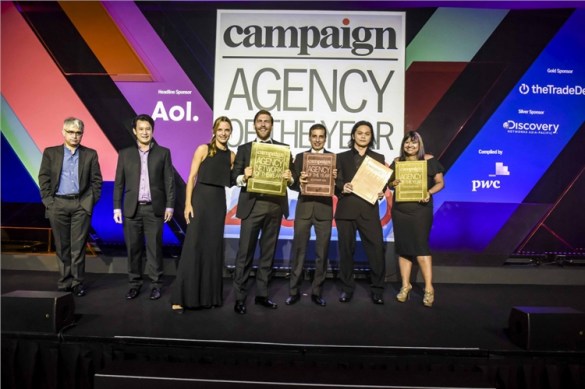
Since 1994, the Campaign Agency of the Year Awards is the Asia Pacific region’s most prestigious advertising industry awards, recognizing inspired leadership, management excellence, outstanding business performance and overall achievements in advertising and communications industry.
With results tabulated by PricewaterhouseCoopers (PwC) it is the only awards program that honors agency performance at both a local and regional level. This year’s Agency of the Year Awards judging panel included 93 client marketers from key business categories across Asia-Pacific, all of whom gave generously of their time and expertise to review and pick out the best amongst a record-high 955 contending creative and media agencies.
Dentsu Aegis Asia Pacific had it’s been showing last night since Dentsu Inc. acquired Aegis Group business in 2013.
Dentsu Aegis – South East Asia Campaign Agency of the Year 2016
Dentsu Brand Agencies new brand proposition of delivering Innovative Business Solutions created in 2016 certainly produced the goods. Brands in Southeast Asia did fabulously with Dentsu media Thailand scoring two Golds for both Creative and Media Agency of the Year and Dentsu Jayme Syfu winning a Gold for Philippines Creative Agency of the Year.
Stemmed from a spectrum of Dentsu’s numerous capabilities, the work produced across the region spans many different forms – from the creation of music to movies and the management of sports to events.
Driven by ideas, technology and a strong sense of entrepreneurship, Dentsu Brand Agencies has positioned itself this year as more than a creative agency – it is a creative leader providing a full suite of innovative business solutions beyond advertising.
Aligned to Dentsu Aegis Network’s overarching vision of ‘Innovating the way brands are built’, Dentsu Brand Agencies’ new brand proposition is set to move people to move businesses as we head into 2017.
Nick Waters, CEO of Dentsu Aegis Network APAC said; ‘This is a tremendous collection of awards, recognizing the strength and quality of our agencies and teams throughout Asia Pacific over the course of this year – many congratulations to all of the winners’.
The biggest win belongs to Isobar, who was awarded Digital Network of the Year for Asia Pacific, the brand’s fifth win within a span of six years. Awarded Gold in the Greater China region, Carat Hong Kong won Hong Kong Media Agency of the Year while Media Palette Taiwan was awarded the title Taiwan Digital Agency of the Year. Dentsu Aegis Network also emerged as Winner in the Greater China Digital Agency of the Year category.
Vizeum Malaysia took home the title of Malaysia Media Agency of the Year, and Dentsu Aegis Network Southeast Asia rounded the awards up by securing the title of Southeast Asia Creative Agency of the Year.
Our Dentsu Aegis leaders did tremendously well too: Ruth Stubbs, Global President of iProspect, and Ashish Bhasin, CEO of Dentsu Aegis Network South Asia, celebrated their second consecutive win as Digital Asia Pacific Agency Head of the Year and South Asia Agency Head of the Year respectively.
Sean O’Brien, CEO of Carat Asia Pacific, won Media Asia Pacific Agency Head of the Year for the second time (his first win was in 2012) while Chris Chen, CEO and Executive Creative Director of Trio Isobar China, won Greater China Agency Head of the Year.
Australia Media Agency of the Year: Bronze: Carat Australia
New Zealand Media Agency of the Year: Silver: Vizeum New Zealand
Australia Digital Agency of the Year: Bronze: Isobar Australia
Indonesia Creative Agency of the Year: Silver: Dentsu Indonesia
Philippines Creative Agency of the Year: Gold: Dentsu Jayme Syfu
Thailand Creative Agency of the Year: Gold: Dentsu Media Thailand
Vietnam Creative Agency of the Year: Silver: Dentsu One Vietnam
Southeast Asia Creative Agency of the Year Winner: Dentsu Aegis Network
Malaysia Media Agency of the Year: Gold: Vizeum Media Malaysia
Thailand Media Agency of the Year: Gold: Dentsu Media Thailand
Vietnam Media Agency of the Year: Silver: Dentsu Media Vietnam
Indonesia Digital Agency of the Year: Bronze: Dentsu Digital Indonesia
Malaysia Digital Agency of the Year: Gold: Isobar Malaysia
Philippines Digital Agency of the Year: Bronze: Dentsu Jayme Syfu
Singapore Digital Agency of the Year: Bronze: Isobar Singapore
Southeast Asia Integrated Agency of the Year: Bronze: Dentsu Media Thailand
Digital Network of the Year: Winner: Isobar Asia Pacific
Asia-Pacific Programmatic Agency of the Year (Sponsored by The Trade Desk): Silver: Amnet Asia Pacific
Asia-Pacific Agency Head of the Year (Media): Winner: Sean O’Brien | Carat Asia Pacific
Asia-Pacific Agency Head of the Year (Digital): Winner: Ruth Stubbs | iProspect Asia Pacific
Asia-Pacific Corporate Communications Team of the Year: Runner-up: Marketing and Communications Team Dentsu Aegis Network Asia Pacific
 As a Chief Digital Officer (CDO) I live every day at the intersection between technology and culture and how it drives change in a company or organization.







 South By Southwest (
 I liked the VR production from




 A journal by Adam Good