The Rise of AI Agents and the Future of Wellness

Auric Rituals

2025 is shaping up to be the year of AI agents—powerful tools that are not only transforming how we work but also how we live. At Auric Essentials, we’re embracing this revolution, and our latest experience with Google’s NotebookLM proved just how game-changing these AI-driven systems can be.

Recently, our Auric Agent (yes, we have a few!) collaborated with NotebookLM to generate a podcast script exploring Mood as a Service (MaaS)—the groundbreaking concept that powers our flagship product, the Auric AromaSphere. The result?

A fascinating conversation about how scent, AI, and IoT are coming together to deliver personalised wellness experiences. While the podcast was born out of AI collaboration, it’s more than just clever tech—it’s a glimpse into the future. AI agents are becoming partners in ideation, creation, and execution inside companies. In our case, NotebookLM became a co-host, helping us communicate how people use our Mood as a Service to transform their lives. Check it out.

The podcast banter is far from perfect. But if you had to brief for a media publishing partner and wanted to get every single product benefit into a podcast, this would be it. It’s easy to understand and highlighted just how far AI has come and hinted at where it’s going next.

As AI tools evolve, they’ll play a bigger role in content creation, storytelling, and even building emotional connections with audiences. No doubt an interesting year ahead.

Signing off for 2024. We are on pause, reflecting, and celebrate with family and friends.

Merry Christmas and Happy New Year to all.

From everyone at Auric Essentials, we wish you a joyful holiday season filled with relaxation, laughter, and, of course, amazing scents.

Auric Essentials: Redefining Mood as a Service with Scent, Technology, and AI

In today’s hyper-connected world, balancing mental health and emotional resilience has become a universal challenge.

We’re living in an always-on society, where technology dictates our rhythms and sensory overload often disrupts our well-being. In this landscape, the idea of Mood as a Service emerges—a revolutionary approach that blends scent, technology, and AI to create a personalised ecosystem for sensory wellness.

This new paradigm takes the overlooked power of smell and combines it with modern innovations to help us regain balance and control.

Why Mood as a Service?

Mood as a Service is about proactively shaping our emotional states instead of reacting to stress or exhaustion. By integrating the power of scent into everyday routines, this concept enables individuals to transition seamlessly between moods—whether it’s calming down after a hectic day, finding focus during work, or energising for an early morning start. Scent, as a tool, is uniquely suited for this purpose. It has a direct pathway to the limbic system, the part of the brain that governs mood, memory, and emotion.

Unlike traditional approaches to mental wellness that focus on screens or supplements, Mood as a Service uses scent to subtly influence mental states. Imagine your space automatically filling with lavender and bergamot as you prepare for bed or the uplifting aroma of citrus and rosemary greeting you as you start your day. These scent-based rituals are not just mood enhancers; they’re behavioural anchors that help create learned responses, improving overall well-being.

The Power of Scent in a Tech-Driven World

Smell is one of humanity’s most primal senses, yet it’s often overlooked in modern wellness. In today’s urban environments, the therapeutic aromas of nature have been replaced by artificial indoor air and city odors. Mood as a Service taps into the restorative power of scent to counteract these environmental stressors.

Scientific research underscores the profound impact of scent on mental health. Rachel Herz, author of The Scent of Desire, highlights how natural aromas can alleviate stress, reduce anxiety, and improve sleep. By integrating this understanding into smart devices, Mood as a Service blends ancient olfactory wisdom with cutting-edge technology to provide personalised emotional support.

The Science of Learned Behavior

Mood as a Service builds on the science of habit formation and learned behavior. Similar to the Pavlovian response, where environmental cues trigger specific reactions, scent can be used to reinforce desired emotional states. Over time, the connection between specific aromas and mental states becomes automatic, helping you shift moods effortlessly.

This approach is particularly powerful in today’s overstimulated world. As Yuval Noah Harari notes, our society’s always-on nature leaves little room for natural cycles of activity and rest. Mood as a Service provides the tools to create those cycles, allowing technology to adapt to us rather than the other way around.

AI and IoT: Transforming Scent into Personalised Wellness

The integration of AI and IoT takes Mood as a Service to the next level. Smart systems, like those found in wellness tech such as the Apple Watch, Oura Ring, and Sleep 8 beds, provide health biometrics that allow for a tailored approach to wellness. Mood as a Service leverages this technology to adapt in real time, delivering scents that align with your unique needs and environment.

For example, imagine a smart diffuser that connects with your wearable device. Your heart rate variability indicates stress, so the device responds by dispersing calming scents of chamomile and sandalwood. As evening approaches, it syncs with your Sleep 8 bed to create an atmosphere that promotes restful sleep. This fusion of technology and olfaction transforms scent from a passive experience into an active participant in your wellness routine.

At the heart of this innovation is the idea of personalisation. Mood as a Service adapts to your rhythm, using AI to learn from your preferences, health metrics, and daily schedule. It doesn’t just support your well-being—it evolves with you.

Building a New Wellness Ecosystem

Mood as a Service is more than a concept—it’s a growing category within the $100 billion wellness tech and IoT market. By combining science-backed essential oils with AI-driven personalisation, this approach offers a new way to think about mental health. It’s not about selling devices; it’s about creating a system that seamlessly integrates into our lives to enhance well-being.

This ecosystem doesn’t just offer immediate benefits; it fosters lasting habits that improve quality of life. For example, the AI-powered Auric Wellness Signature tailors essential oil blends based on individual health biometrics, environmental inputs, and emotional states. Over time, these personalised rituals cultivate emotional resilience and mental clarity.

The Future of Mood as a Service

As we move into the future, Mood as a Service represents a paradigm shift in how we approach mental health and wellness. It’s not about replacing traditional methods but enhancing them with the power of scent and technology. By leveraging AI, IoT, and health biometrics, this approach creates an intelligent system that adapts to the demands of modern life.

In a world dominated by screens and schedules, Mood as a Service offers a refreshing alternative—one that’s grounded in the natural power of scent and amplified by technology. This isn’t just about wellness; it’s about reclaiming balance in an always-on world, one breath at a time.

Whether you’re seeking calm after a long day, focus for a critical task, or a restful night’s sleep, Mood as a Service provides a personalised path to emotional and mental resilience. It’s a new way to experience wellness—empowering you to pause, breathe, and thrive.
Unleashing the Creative Power of AI

Exciting news! After four and a half years at WPP as an Executive Director of Marketing Technology, I am embarking on a new adventure of learning. I’m leaving the executive world for the world of building a startup.

My time at WPP was filled with incredible experiences—collaborating with brilliant people and navigating the ever-evolving intersection of technology, communication, and consumer experience. As AI began reshaping every aspect of how we work in the agency, I felt a pull to not just observe the shift or support clients—but to build something of my own.

During COVID, I started a self-funded project called Auric Essentials. What began as a curiosity became a passion: could artificial intelligence elevate emotional, sensory, and even spiritual well-being? At first, it was a side venture. A sandbox. A place to explore how AI could blend with human creativity, ritual, and mood.

Reimagining Wellbeing with Technology

Auric was born from a fascination with the concept of auric energy—that subtle, often unseen field that surrounds and influences our emotional states. I started wondering: could we design technology that respected that energy? Could scent, emotion, and data come together to improve how we feel in our environments—our homes, our workplaces, our everyday lives?

So I built prototypes. Ran small experiments. Designed rituals. Explored AI-generated wellness journeys. Developed hardware. The goal wasn’t novelty—it was resonance. Could this work actually help people feel better? Could we generate data that proved it?

Embracing Human-AI Synergy

Throughout this journey, one principle kept guiding me: human-AI synergy. The belief that the best outcomes come not from replacing people, but from enhancing their capacity to create, to feel, to connect.

I’d spent years inside agencies understanding idea generation, content creation, and amplification. But at Auric, the question shifted from “how does this scale?” to “how does this feel?” Can AI play a role in something as delicate and complex as mood?

This is the space I’m committed to exploring full-time.

From Side Project to Company

What started as a part-time project—Auric Essentials—is now evolving into something much larger: a company. A team. A product. A platform. A category-defining brand that places AI, scent, and mood at the heart of the wellness experience.

At its core, Auric is built on the idea that AI can be more than just a tool. It can be a partner in human flourishing.

A New Chapter Begins

This is a big personal pivot—from agency life to founder life. From helping brands find clarity with technology to helping people find calm with intelligent design. From managing systems to architecting emotional ecosystems.

I’m excited for what’s next. If you’re building at the intersection of AI, creativity, and wellness—or just curious—I’d love to connect.

WPP and BigCommerce partner to enhance global ecommerce offerings

WPP and BigCommerce (NASDAQ: BIGC), a leading Open SaaS ecommerce platform for fast-growing and established B2C and B2B brands, today announced a new strategic partnership offering omnichannel solutions to help WPP clients drive growth and maximize sales across hundreds of advertising channels and marketplaces. 

This innovative partnership will give WPP priority access to new product tools on both BigCommerce and data feed management platform Feedonomics, in addition to providing APIs and data sets that will enable WPP agencies to develop unique insights for clients across product, trend and purchasing data.

The partnership reflects WPP’s ongoing investment in its commerce offer for clients. It includes a joint commitment from BigCommerce and WPP to help shared clients develop nimble commerce solutions and scale growth, and follows the announcement that WPP agency Wunderman Thompson has joined the MACH Alliance, of which BigCommerce is an early member.

As BigCommerce’s inaugural data partner, WPP will receive priority access to alpha and beta products as well as platform integrations including Amazon, Meta, Google and TikTok. These tools will allow teams to maximize omnichannel sales and optimize spend for both B2C and B2B clients.

WPP will help shape product development and innovation at BigCommerce with commerce specialists joining product and partner councils, in addition to receiving access to a custom training program and certification pathways. As part of the partnership, WPP will commit to upskilling 150 commerce specialists within the first year of working with BigCommerce.

The partnership announcement aligns with WPP’s accelerated growth strategy to strengthen technology and commerce offerings, and follows the news of the company’s ranking as a Leader in Forrester’s latest global Commerce Services Wave.

2023 the year of AI

I spent the Christmas and New Year break going deep into Chat GPT 3.0, the third iteration of OpenAI’s chatbot model. Undoubtedly, this update has shown the world the revolution of what conversational artificial intelligence will do to the creative industry.

Built upon the foundation of its predecessors, GPT 2.0 and GPT 1.0, this advanced language model has taken the capabilities of chatbots to new heights.

With an expansive knowledge base, improved responsiveness, and multilingual language use, Chat GPT 3.0 will become a game-changer in how the creative industry will incorporate it into creating and launching ideas.

With the exciting differences between Chat GPT 2.0 and 3.0, I have never seen anything more transformative to the impact on the productivity of the advertising and media landscape.

I have experienced firsthand the remarkable evolution of this technology and its transformative impact on the advertising creative content process for some time. I always have AI as a top agenda item at our bi-weekly WPP Creative Council meetings.

From the initial stages of experimentation to the present day, AI has become an indispensable tool, revolutionising numerous roles within our agency network (especially at our media strategy and delivery teams) and fundamentally changing how ideas and code are conceived and brought to life across our workload at our agencies.

My personal journey with the significance of Chat GPT 3.0 prompt engineering highlights to me its essential role in maximizing the potential of the tool in empowering creatives in the age of AI.

Since its inception, Chat GPT has captured the imagination of creative teams at WPP, serving as a powerful catalyst for innovation and ideation and ongoing discussion with leading Creative Directors on what it does well and not.

It has been embraced as a ‘test and learn’ tool, providing a springboard for even more imaginative ideas crafted through the lens of human creativity.

As AI technology advances with each new version, from GPT 2.0 to 3.0 and beyond, Chat GPT’s wealth of knowledge and capabilities surpasses many of my expectations, leading to a discussion about the future where AI-driven ideation outpaces human capabilities. Not something that everyone wants to have by the way.

Prompt engineering has emerged as an essential skill for creatives seeking to effectively leverage Chat GPT and similar conversational AI systems. It empowers them to design and manage prompts that elicit desired responses, resulting in engaging, relevant, and result-oriented conversational experiences. Text graphic and video.

With careful manipulation of prompts, creatives shape the conversation, infusing the AI system with the essence of human-like engagement that has the potential to captivate and produce a desired action.

Prompt engineering also plays a crucial role in managing ethical considerations and user expectations. This is the most exciting area for creative leadership. Skilled creatives strike a balance between the capabilities and limitations of AI models like Chat GPT, setting clear expectations through prompts to avoid overpromising or generating misleading information.

Trust is fostered by transparently guiding users through the AI’s abilities, and potential issues are mitigated.

The Collaborative Dance between AI and Human Creativity is what 2023 will be known for.

While prompt engineering empowers creatives to shape conversational experiences, it is essential to recognize that AI models are tools to enhance human creativity, not replace it. Or will it?

The collaboration between AI and human ingenuity yields the most compelling and impactful creative output. Prompt engineering serves as a bridge, enabling creatives to guide and leverage the capabilities of AI systems while infusing their unique perspectives and expertise.

Looking ahead this year, prompt engineering will continue to be a vital skill in the arsenal of creatives to accept or decline. As AI models evolve, including the highly anticipated Chat GPT 4.0, the importance of understanding AI will only grow.

Creatives must stay abreast of advancements, constantly refining their prompt engineering skills to unlock the full potential of these AI systems. By doing so, they will push the boundaries of creative expression and shape the industry’s future.

My journey as an early adopter I believe this latest update of Chat GPT will revolutionise the advertising creative content process. It will open up much discussion about the ideation tool as it comes to head to head with the productivity improvements it guarantees.

For me embracing prompt engineering gives you a firsthand look at the understanding of fundamental concepts, enabling them to design engaging, relevant, and result-oriented conversational experiences.

The power of iteration it gives makes a creative revolution in itself. You can harness the iterative process to push boundaries, drive innovation, and spark transformative revolutions by continuously refining, revisiting, and evolving ideas.

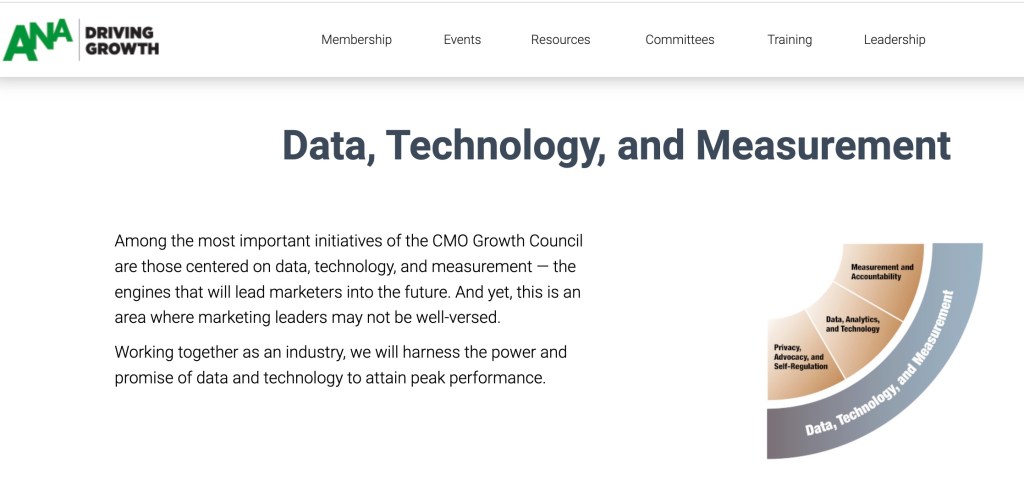
Cannes Lions and ANA’s CMO Tech & Data Growth Council

I was delighted and honored to be invited to join a new ANA Growth Council called Data & Technology working alongside members Raja Rajamannar (MasterCard), Julia Goldin (LEGO Group), Marcel Marcondes (AB InBev), Mathilde Delhoume (LVMH), Elizabeth Rutledge (American Express), Karen Walker (Intel), Alicia Enciso (Nestlé), Norman de Greve (CVS Health).

The Global Growth Councils for Progress have been established by Cannes Lions and the ANA to help our industry achieve its full potential and make progress as a global force for growth and a force for good.

As a community of CMOs from the world’s top brands, the Global CMO Growth Council has made significant progress in tackling the core issues that are paramount to achieving success for your business – and indeed making the world more sustainable and equitable.

This year, it extended its remit and reach, and welcomed professionals from both agencies and brands to join its work as it focuses on the five most pressing issues – as identified by LIONS and ANA research.

Measuring the impact marketing has on business, people, and the planet is essential to creating long-term value. Yet, CMOs have struggled to demonstrate clear progress across an increasingly complex array of standards, frameworks, and initiatives. The recent Lions State of Creativity Study mirrors the key issues we face as an industry.

Mastering data and technology underpins our ability to deepen the connections between our brands and the people we serve – especially as the frontier of Web 3.0 unfolds. But we must first master the ability to measure our investments in the physical world before we can build brave contemporary brands in the blockchain-driven, token-based economy of a virtual multiverse.  

Together, Lions and the ANA will provide the year-round platform for the industry to convene and track progress, with the councils returning to Cannes Lions in 2023 for an update on the industry’s collective progress.

Excited to get involved.


The Metaverse Foundry

Hogarth, WPP’s specialist global creative content production company, is launching The Metaverse Foundry to deliver brand experiences in the virtual world. It will consist of global team with more than 700 creatives, producers, visual artists, developers and technologists.

The metaverse, for those of you who haven’t been listening at the back, is defined as a “simulated digital environment that uses augmented reality (AR), virtual reality (VR), and blockchain, along with concepts from social media, to create spaces for rich user interaction mimicking the real world.”

The Metaverse Foundry is built to take ideas to the next level at scale. A limitless place where creative, production and innovation come together to bring to life the greatest ideas, elevate e-commerce and customer experiences.It will provide  every aspect of experience design and production, virtual art, virtual stages, development of VR/AR applications, technology, and R&D.

WPP agencies are already delivering multiple metaverse projects for clients including Wendy’s, Under Armour, Duracell, Pfizer, Pizza Hut and Bombay Sapphire. 


The foundry will also collaborate with specialist WPP agencies such as Subvrsive (virtual events and immersive experiences) and Ars Thanea (design/animation and live action/visual effects studio) to supplement with specific additional skills.

The pandemic has accelerated the adoption of innovative technologies as people have learned to connect with each other in new ways.

The metaverse, with connected virtual worlds, augmented reality, NFTs and the blockchain. presents limitless opportunities for brands to build creative experiences and engage with diverse, highly loyal audiences.

Its market size in 2021 was estimated to be more than $1 trillion, growing at mid double-digits.

Andy Hood, VP Emerging Technologies at WPP, hosts a 6-minute metaverse masterclass.

Audio programming that can listen, remember and adjust

Too much screen time we know is a problem.

Covid created more screen time as we went from zoom call to zoom call and more time on the couch with streaming visual content binging. Going from a working screen to an entertainment screen does create some well-being challenges.

Enter audio time.

After years of visual screen dominance, people started to find and enter a new era during Covid– the time with Sound.

Technology is a powerful enabler for this shift as it intensifies and diversifies how we listen.

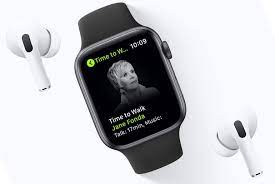
Apple Walk

Good sound quality triggers positive emotions. When your right moment, music is started at the right time and right place. Your life improves.

Your feelings change; you become uplifted or feel relaxed.

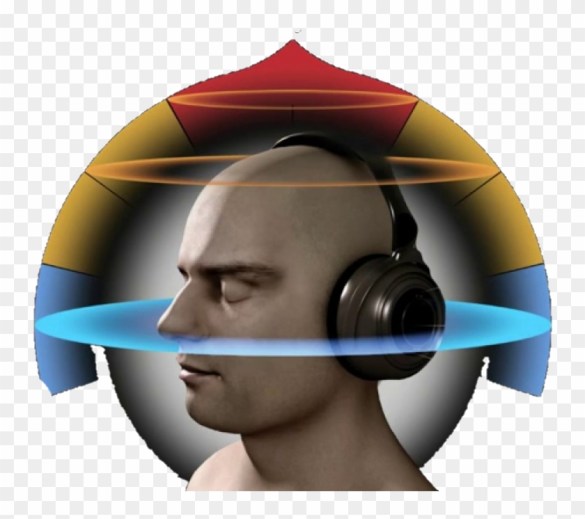
manheadphones

If you think of the opposite, what can happen if bad quality audio triggers negative emotions such as dissatisfaction, annoyance, or disappointment.

Despite a trend in visual and screen time where we can sacrifice quality for convenience, our audio behavior suggests quality matters very much.

I am seeing a growing demand for personalized audio experiences that are immersive, intimate, and fine-tuned by the listener.

Audio and Sound technology enhancements act as a catalyst for this change, offering people unlimited ways to experience Sound is a creative pallet to explore and is only just started.

Consider the explosive growth of podcasting over the last few years – the medium has firmly crossed into the mainstream as more than half of Americans and Australian’s over twelve years old have listened to one.

And then there is the rise of smart speakers, the fastest-growing tech sector in the United States and emerging in Australia. Nearly one-third of households have one audio streaming service, and almost every smart speaker owner has more than one device.

Speakers

Who didn’t increase Sound and audio combined with a healthy walk in your Covid lockdown? More and more, produced audio is becoming an essential addition to our daily lives.

And as we enter a post-Covid reality, we are about to turn a corner into a sound-first era. Technology is fueling the audio revolution: it has unleashed the sound experience from any tether. Streaming services like Spotify and Apple Music mean that Sound is no longer dependent on a carrier medium or dedicated device. Instead, listening has become mobile and on-demand.

Like an invisible companion, Audio is no longer dependent on a carrier medium or dedicated device. Instead, listening has become mobile and on-demand. Sound accompanies us wherever we go, without interruption.

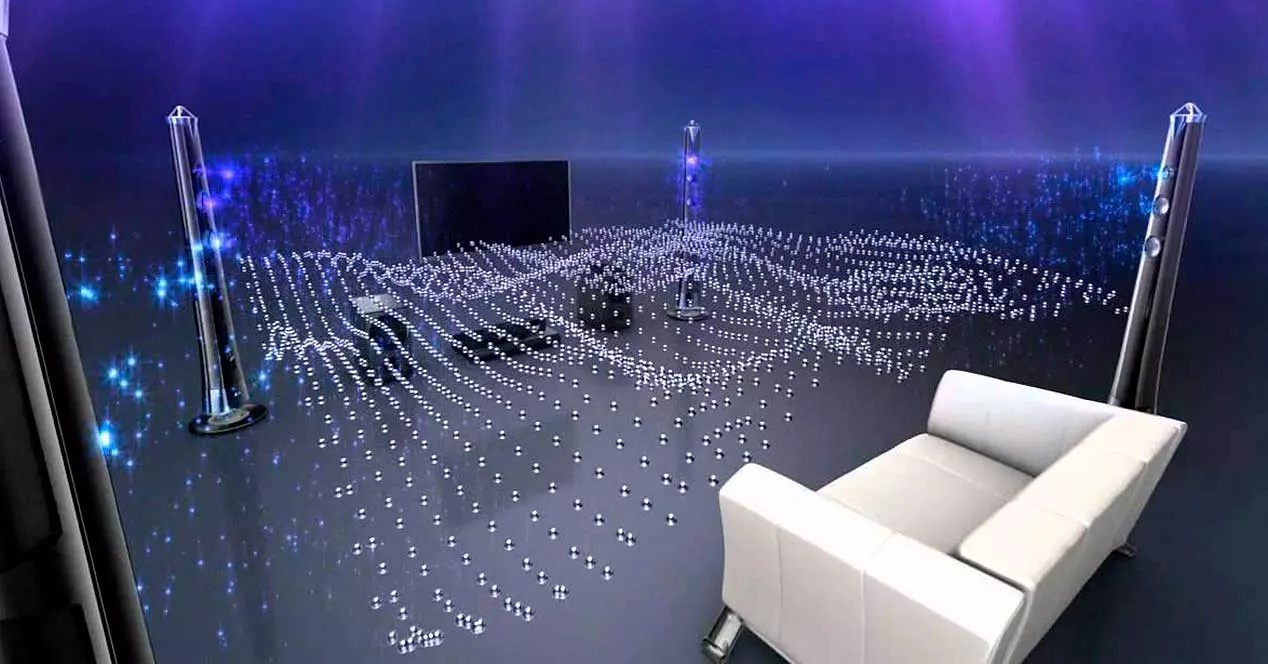
While audio quality continues to advance both in how it’s produced and delivered. The addition of 3D and surround sound technology will change the category even further.

Sound will accompany us like a kind of halo and open up new virtual spaces for listeners—the ability to combine listening to audio programming with virtual spaces for an entirely new experience.

While advances in mobile and streaming technology have been fundamental to shaping the listening experience of today, A.I. will open the next frontier of personalisation.

Consumers will be seeking audio programming that that can remember and adjust their listening preferences according to different environments.

From waking up, self-love rituals, exercise, entertainment, and downtime.

Audio with A.I. will allow for this level of personalisation, with content, tracks, and moods tailored precisely for each listener and acoustics that auto-adjust as you move through your day.

Sound and audio programming will increase and advance so much in the next decade because the experiential Sound delivered will see consumers’ time on the visual screen be reduced.

And that sounds very positive for our well-being.

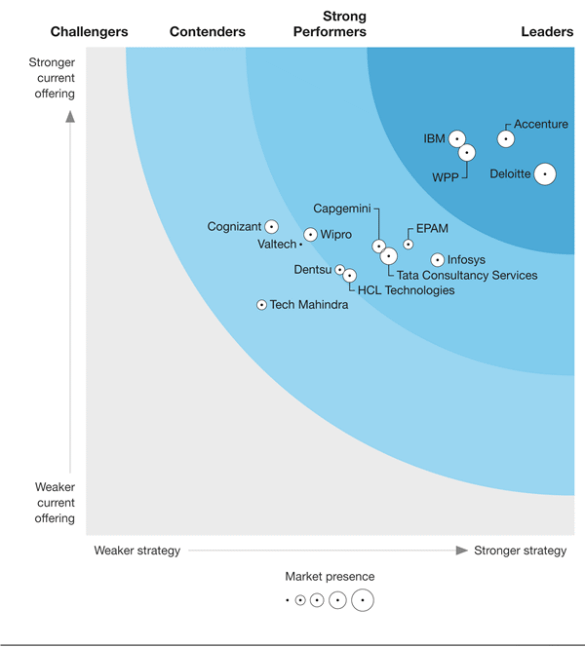
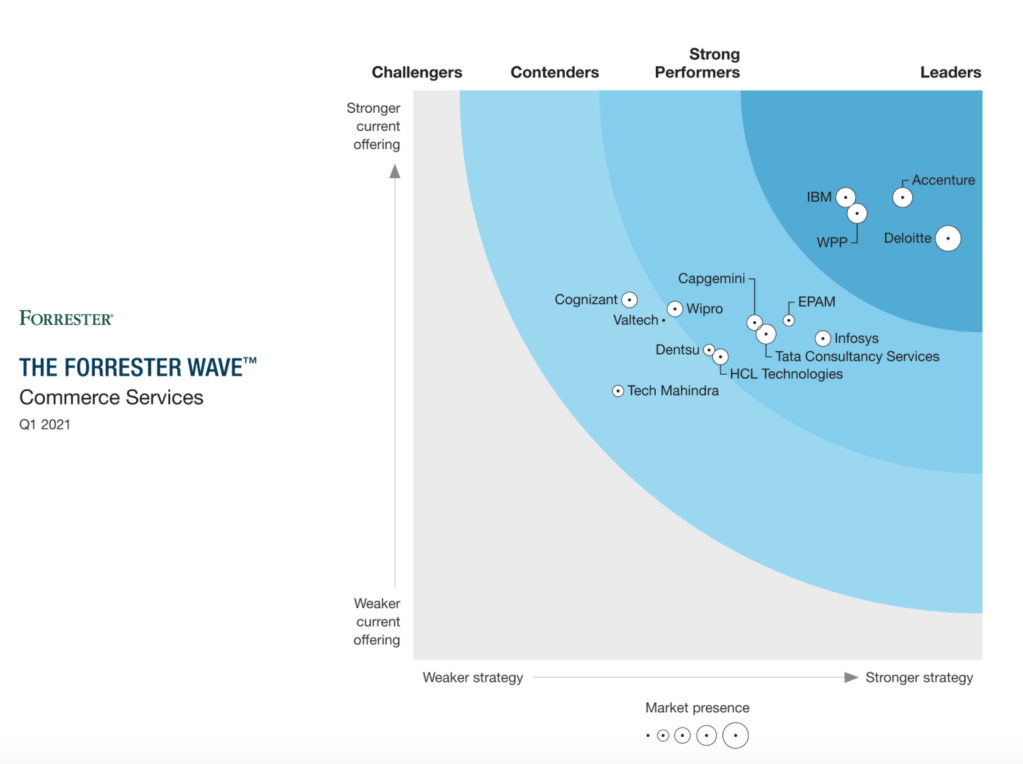
WPP has been named a Leader among commerce services providers by Forrester Research, Inc.

The Forrester Wave™: Commerce Services, Q1 2021 evaluation ranks the 14 most significant commerce providers as Leaders, Strong Performers, Contenders or Challengers against their current offering, strategy and market presence. Fulll report found here

WPP received the highest scores possible in 12 criteria including Omnichannel Commerce Strategy, Organisation Design & Change Management, Global or Multibusiness Unit Commerce Architectures and Vision.

The report suggests that “companies seeking help with their commerce transformation should look for service providers that: offer a full set of services including commerce strategy and implementation… have expertise and capacity in their commerce platform – or headless architecture… [and that] focus on their industry region.”

Following the rapid growth of ecommerce and the digitisation of services due to the pandemic, the demand for agile, full-service partners has increased from companies that require omnichannel expertise to support commerce transformation or to adapt existing business strategies around evolving customer needs.

The Forrester report states, “WPP leads with strategy and implementation as well as in Amazon and social selling.” The report gave WPP full scores in the criteria of: global or multibusiness unit commerce architectures; emerging commerce touchpoint services; commerce experiences supporting services; privacy and compliance; programme management; vision; and partner ecosystem.

The Forrester report notes, “Compared with other providers we evaluated, WPP shows strength and higher client satisfaction in commerce strategy services, emerging commerce touchpoint services, commerce experiences supporting services, and programme management… WPP is a good fit for companies seeking a global omnichannel commerce partner with expertise in helping clients navigate and monetise emerging channel options”.

WPP works in collaboration with its partners across all major commerce technology platforms including Adobe, Amazon, Alibaba, Salesforce, SAP, Shopify and Sitecore.

WPP and TikTok Announce First-of-Its-Kind Global Agency Partnership

WPP & TikTok

WPP and TikTok today announced an innovative global partnership to enable WPP agencies and clients to tap into the culture-shaping impact and reach of the platform. The partnership allows WPP clients to benefit from unique access and capabilities on the TikTok platform.

Recognising the significant opportunities for brands that both short-form video and digital content continue to present, WPP will have early access to advertising products in development, ensuring WPP and its clients remain at the forefront of innovation as TikTok further develops its suite of products for brands. This includes partnering on marketing API integrations and next-generation formats, such as augmented reality offerings. Subvrsive, a WPP company, was one of the first TikTok Effects Partners.

TikTok will also collaborate with its talented creator community to build a diverse network of creators to partner with WPP and facilitate exclusive opportunities for collaboration with select advertisers. WPP will be the Lead Agency Development Partner to new creator-focused APIs, which will incorporate WPP’s brand safety methodology while leveraging unique brand and marketer data signals. The goal of these new solutions will be to enable brands to gain deeper insights on creators, connect with diverse voices and have early access to these creators for their campaigns.

Additionally, WPP and TikTok will co-create an industry-leading training and accreditation program for WPP agencies, which will secure priority access to content tailored to media and creative disciplines. This program certifies that WPP’s talent is leading the development of best-in-class creative and media solutions on the TikTok platform.

TikTok Revenue and Usage Statistics

To further build brand safety solutions on the platform, GroupM, the media buying arm of WPP, and TikTok will continue to work on complete integration with third party verification vendors, developing meaningful first party inclusion and exclusion controls, and alignment with the GARM Brand Safety and Suitability Framework. The companies also intend to jointly conduct market-leading research to guide brands on TikTok best practices and assist them with employing data-informed strategies for driving engagement on the platform. GroupM has already engaged TikTok on niche auction training and will continue advancing buying capabilities through its large network of specialists.