Adobe Summit 2019 Las Vegas

Adobe

The Adobe Summit in Las Vegas is where I find myself this week in the constant search for creativity using martech. It has been running day and night from March 26th and is wrapping up today April 2. The big pressure on companies and brands now to produce creatively using their current Martech investment is a key program of work for 2019.

Company web sites have evolved from the static content and word processor approach to the primary business, marketing and sales application to create brand preference that grows the companies e-commerce approach primarily driven via machine learning and new digital applications.

The high-pressure environment for CIOs, CTOs, and CMOs who are currently making decisions on their martech investment is now a constant conversation in many board rooms and investment working groups.

Brands need much more than just touching up of existing photos combining with some long-form copy to great a category winning customer-led business solution that drives new revenue. Hence why some feel when discussing technology license and renewal agreements their current Adobe tool investment has not gone far enough. More work to be done in other words.

Brands require creativity first to go alongside a digital economy strategy and then the technology and toolset license agreement that delivers and creates compelling and personalized customer presentations always looking to improve customer experiences and revenue outcomes.

This is done using frictionless customer journey programs using a combination of text, sound, and videos that can be assessed in omnichannel environments using gesture and voice commands.

At Adobe Summit, Adobe unveiled the latest Adobe Experience Cloud innovations, including Adobe Commerce Cloud and Marketo Engage, as well as global availability of Adobe Experience Platform.

Microsoft CEO Satya Nadella, Best Buy CEO Hubert Joly, Chegg CEO Dan Rosensweig, Intuit CIO Atticus Tysen and SunTrust Bank CMO Susan Johnson shared their respective enterprise playbooks for digital transformation. Additionally, Adobe announced key strategic partnerships with ServiceNow, Microsoft, and LinkedIn to accelerate Customer Experience Management (CXM) across enterprises.

Adobe continues to push to be the only martech tool provider that is constantly acquiring leading capabilities across the customer journey, adding marketing automation and commerce capabilities to bookend its strong digital foundation of content and data within experience cloud.

WPP is a key partner to Adobe for many years and has strategically developed a leading set of capabilities to respond to market demand for agile, technology-enabled customer experiences across the Adobe experience cloud suite.

At WPP we have over 2,225 Adobe Experience cloud practitioners, over 375 Adobe Experience Cloud Certificates and 6 Adobe Experience Cloud Advisory Board seats so our commitment is high to this martech partner.
The Adobe Sumit was attended by over 16,000 people that included Adobe direct clients as well as clients that use Adobe through a myriad of partners and add ons who assist organizations implement their big, complex solutions.

At WPP our unrivaled Adobe capability has the most comprehensive experience and expertise than anyone else in the industry. Period.

Our specialized WPP agency brands have a long-standing and deep relationship with Adobe and other experience technology companies for many years.

Adobe is a long partner of mine personally both direct to client and to the agency as a toolset for our creativity. At WPP we use them in four key areas of our business offering across communications, experience, commerce, and technology.

WPP as a creative transformation company know two things: there’s a future in becoming a systems integrator for the likes of Adobe and it is a key offering when stitching together Microsoft, Google, Salesforce and other web CMS platforms together to create business solutions.

The prospects of one company owning all of a customer’s data remains a scary one for our clients and marketing leaders now either have full responsibility, or part of a key stakeholder in the companies overall enterprise technology decisions and that landscape constantly changes.

Adobe is a giant tech company at a market cap of ($130.21 billion) but they are still small in the titanic battle martech industry is on. If you decide Adobe you will likley need to integrate with Microsoft ($919.36 billion) SAP($141.80 billion), Oracle ($184.55 billion) and IBM (127.10 billion) via your direct digitial ecosystem or via partner programs.

Outside of these key martech players, you also have integration points to the media platform providers with the market caps of Google ($844.52 billion), Amazon ($900.53 billion) and Salesforce ($122.52 billion) and LinkedIn ($26.2 billion acquisition from Microsoft.

This challenge of constant change and evolution of technology keeps everyone at WPP engaged and challenged and we enjoy being a strategic partner at the intersection of all these points with our clients.

Our WPP agency team were aplenty at the Adobe Summit as we scattered ourselves across the 300 sessions and labs either presenting or we found ourselves within the eleven content tracks that included;

  • Advertising
  • Analytics & Data Management
  • B2B Marketing Automation with Marketo
  • Content & Experience Management
  • Design-Led Customer Experiences
  • Email & Omnichannel Marketing
  • Experience-Driven Commerce with Magento
  • Marketing Innovations
  • Personalization
  • Platform, Machine Learning & Ecosystem

The most interesting aspect of the Adobe summit this year for me personally was seeing Microsoft getting heavily involved in the conference with Microsoft CEO Satya Nadellaand keynoting and showing the integration of their business tools and putting some life into the category beyond Office.

Microsoft is doing great with Azure but the other office tools and larger applications like the Dynamics portfolio have some slow traction in client uptake. What was signaled at the summit was the relationship between Dynamics CRM and the Adobe marketing suite is going to get stronger. Microsoft and Adobe pushed an extension of the Open Data Initiative (ODI) partnership with SAP and their investment in Account-Based Experiences (ABX) with LinkedIn is going to see a lot of new opportunities.

Adobe and ServiceNow announced plans should enable integrations between Adobe Experience Platform and the ServiceNow Now Platform to enhance Adobe’s real-time customer profiles with ServiceNow’s rich customer support data. This will create a more comprehensive view of a customer across the entire digital journey, from acquisition to service. Additionally, Adobe Experience Cloud solutions will integrate with the ServiceNow Now Platform, including its Customer Service Management (CSM) solutions.

Adobe and ServiceNow will partner to enable their mutual customers to integrate and leverage digital workflows, service catalogs, intelligent content and knowledge management capabilities (see press release).


Yes 5G will change everything again


5G is the fifth generation of wireless technology is now available and rolling out in Australia.

The connectivity benefits of 5G will make businesses more dynamic, efficient, and give consumers access to more content experiences faster than ever before. Super-connected autonomous cars, smart communities, industrial IoT, immersive education—they all will rely on 5G.

5G is also expected to allow for up to 1 million devices functioning at full capability in 1 square kilometer. Energy, Efficiency, and Service Deployment are the next key areas that will be changed by 5G, allowing for devices to consume a staggering 90% less energy in data operations compared to 4G networks.

5G will bring a world where little storage on your phone is required because everything, including mobile apps, are instantly available from the cloud.

To take this further, imagine a gaming console that works years longer than what a current one does today because you will never have to upgrade.

Instead of getting a different console with a new disc reader that supports bigger games, or better hardware to handle the newest titles, all of that processing power could be offloaded to a remote server and then streamed to directly to a device in real-time.


Some early, and simple, examples of 5G AR include projecting emails and text messages into the room or creating multiple floating monitors to extend a users computer’s display. It will be like erecting a virtual HDTV into a living room.

Augmented reality (AR) and virtual reality (VR) are very bandwidth-demanding technologies, which 5G can handle with no problem.

Right now, AR and VR require bulky headsets, with the technology either embedded in the device or linked to a computer via a hardwire connection to help with latency. With 5G, the headsets can get much lighter, with the connection able to instantly stream content from the cloud.

Where we are today in Australia is only three mobile phones – the LG V50, Samsung Galaxy S10 5G, and the Oppo Reno 5G, along with the HTC 5G Hub which is offered at the home user looking for super-fast broadband.

It is happening fast, so hold on tight.

Frank Health Insurance Google Voice Assistant

Frank Health Insurance has launched Australia’s first voice app via WPP AU NZ whiteGREY, for the Private Health Industry (PHI) category, built for the Google Assistant.

The ‘frank insurance’ app provides easy answers to the complicated PHI questions that plague the industry. 

To get access, users simply ask any google assistant to ‘speak to frank insurance’.  The app has been developed as an extension of frank’s ‘easy as frank’ brand platform.

frank_wG voice App Image 2.jpg

OK Google ‘Speak to Frank Insurance’

whiteGREY head of technology Juan Garcia said the voice app is designed for members and non-members alike, as both a customer utility and demonstration of frank’s brand ethos.

Says Garcia: “With the cross-channel voice era now well and truly here, service categories like private health insurance are looking for innovative ways to keep up with public expectations of simplicity and convenience.

“frank found themselves uniquely suited to lead the PHI industry into voice technology, not only because of the brand’s role as a digital insurer but because of a mission to set the standard in ease. With imminent changes to the category in the near future, an app for consumers to easily get the right answers was a great opportunity to set the brand apart.  We knew immediately what was needed and what would make it unnecessarily complicated.”

Says Diane Pavlicevic, who holds duals roles as the head of frank Health Insurance as well as marketing head of parent company GMHBA: “As a digital health insurer that lives to simplify a complicated category, building Australia’s first health insurance voice app was a natural decision. Not only is it a clear demonstration of the ‘easy as’ proposition that defines frank so well, it sets up the brand to continue innovating into the future.”

The frank insurance voice app will be promoted through a media partnership with Spotify and accompanied by an awareness campaign encouraging consumers to not direct their PHI questions to the wrong people. This will run purely on digital channels (display and social).

Joining WPP as Executive Director, Marketing Technology.

WPP

I’m excited to announce that WPP has appointed me into a newly created role of Executive Director, Marketing Technology Australia, and New Zealand. I start today located at 1 Kent Street, Miller Point in Sydney.

WPP AUNZ is the leading marketing communications services group in Australia and New Zealand. No other group comes close to our scale and breadth of capability comprising 5,500 people working across over 80 companies in over 170 offices.

WPP starts 2019 following twelve months of unprecedented growth and client investment in technology services, and my new role aims to provide a valuable resource for all WPP AUNZ Group agencies to access best in breed technology and programme delivery capability.

I am excited to be joining at a time of new WPP vision to be a creative transformation company, bringing together creativity and expertise in technology and data – with the purpose of building better futures for its people and clients.

WPP’s future offer will cover four areas: communications, experience, commerce, and technology.

  • Communications
    Focuses on advertising, content, media, public relations and public affairs, and healthcare.
  • Experience
    Reflects the growing need of clients to create new brand, product and service experiences.
  • Commerce
    Allows WPP to expand its growing omnichannel commerce business and its work with brands to help them succeed in marketplaces such as Alibaba and Amazon.
  • Technology
    Underpins WPP’s work with both CMOs and CIOs to build and operate marketing technology that supports their consumer- and customer-facing activities.

My role is to focus on establishing an interface for all WPP agencies, connecting with global WPP network shared service models, plus evaluating and filling any resource gaps at each of the Group’s agency brands – while leveraging existing capabilities. I look forward to collaborating with many of my colleagues in the expanding MarTech and AdTech industry.

This role is about providing guidance and support to our agencies today while future-proofing our client relationships. It’s about being technically astute and deeply aware of digital, technical, scientific and business model innovations. Connects these to business benefits and human values is essential. As a transformational professional, I also know how much it is about a ‘felt experience’. To be able to bring the worlds best transformation tools, processes and techniques to maximise the benefits and minimise distress.

In other words, evidence-based decisions to understand and apply the role of evidence to all our client work and solutions.

I have been working at the intersection between business strategy, creativity, technology, data, marketing, and digital customer experience for more than twenty-five years, living and working in the United States, China, Australia, New Zealand, and Singapore and it’s always great to be based in Sydney.

I will be calling on my agency side experience working with Omnicom and more recently Dentsu Aegis, and client-side roles with Microsoft, Newscorp and Telstra who have taught me so many life lessons to use straightforward language without lessening complexity.   Able to bring order and simplicity to ambiguity and complexity.

I feel very privileged to return to Australia and join an organization dedicated to creative transformation. I have always been passionate about how brands and businesses combined with technology can create participation with consumers to enhance the customer experience and advance the users purpose.

Connection Oils. The language of touch and smell.

Wellness is one of the world’s largest and fastest-growing industries. Consumer demand for wellness services and products is higher than ever with recent reports indicating the sector is worth $3.4 trillion, making it nearly three times larger than the $1 trillion worldwide pharmaceutical industry.

One component of the industry that seems to touch a number of Wellness sectors is the market for Essential Oils which is expected to touch US$17.36 billion by the start of 2019.

Further, the Essential Oils market is projected to expand at a CAGR of 9.60% between 2019 and 2022 and attain a value of US$27.49 billion by the end of 2022.

Although the future of the Essential Oils market looks thriving, it may face obstacles in its growth trajectory from the high price of essential oils and the confusion of its use among consumers regarding their benefits, however, the increasing demand for essential oil in aromatherapy and various natural remedies are expected to propel this market further.

21st & Dolores my personal business venture is working on a minimum viable product in the Essential Oils market and is now seeking first-round investment. It’s called Connections Oils experiment, join the community and follow the progress here.

Always be useful first

A constant theme in my professional life that I openly express to clients, and also write about on this blog is how technology and digital channels continue to drive people to become more demanding of brands and businesses.
People are expecting to be able to do anything they want, anytime and everywhere with the companies and brands that they deal with.

This means all manner of industries are changing their business approaches and becoming increasingly digitized, seeking and demanding a variety of new interactive services to meet what is the most demanding consumer the planet has ever experienced.

In my professional career, I have always been passionate about three key business strategies for brands. Each hyperlink provides further details on this theory.

1. Be customer centric in everything you do and make your brand useful to people first, before doing anything else.

2. Understand the entire customer experience you are operating in and advance the user’s purpose pre, during and post any engagement and transaction of value.

3. Don’t create friction or worse take up oxygen with messages that are not important at that point of the user’s goal. Always attempt to create twenty-four seven customer led experience that continues to be optimized both online and offline.


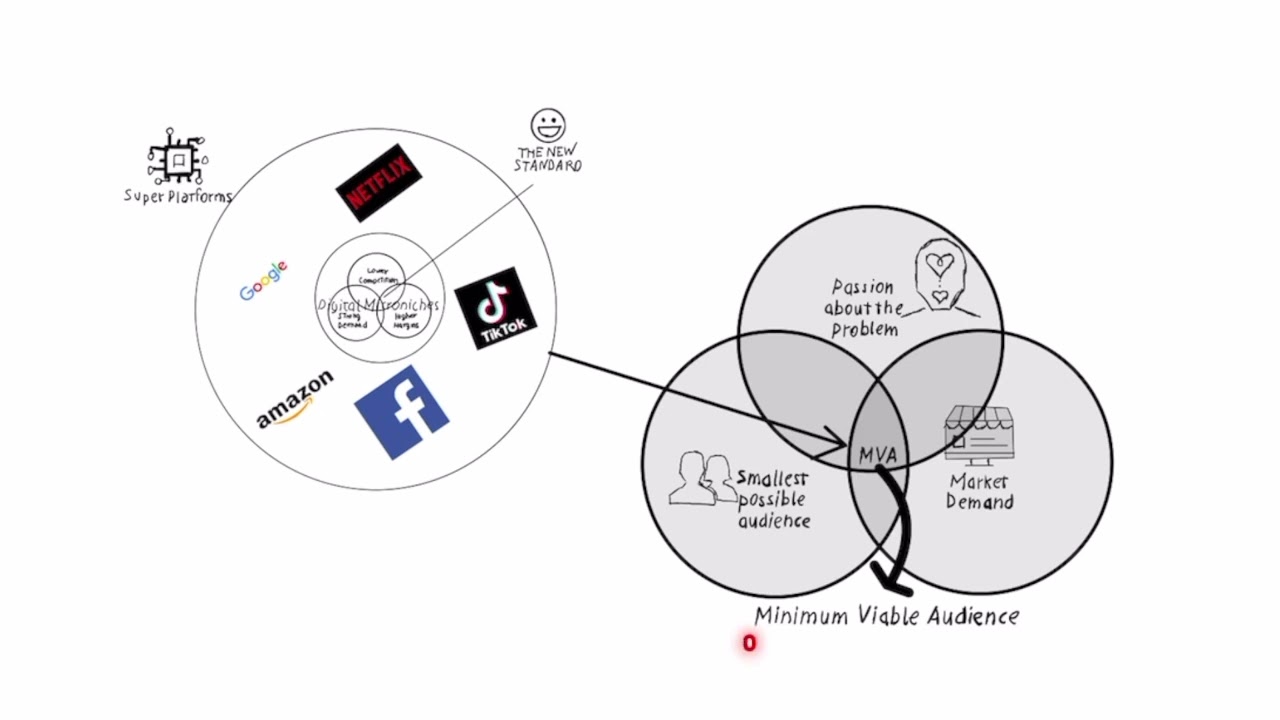
Creating a mindset change that a unique brand experience is for your minimal viable audience


The Minimum Viable Audience In A Nutshell - FourWeekMBAWhen I first joined the world of advertising many moons ago, the purpose, the business discipline and group of people who worked in and around it had a mindset geared towards trying to create a brand to reach a maximum audience.


To be seen by millions to have a huge impact was the goal of any advertising brief and piece of work.

We ran around the agency with our clients spending time looking backward from past advertising, admiring great memorable ads as well as digging into research on what people liked and didn’t like about ads.

We researched what had happened, generally believing that past advertising techniques would show us the way to great future advertising programs of work.

While there is no doubt the advertising science has matured over the last twenty-five years. We have learned to talk about a mass market ambition via using data, target audiences, look-alikes. We also use consumer research to produce a brand proposition that is the basis to drive an Omnichannel idea.

However, I still wonder often when in the day to day of work if we have the right mindset on what a great brand experience should be?

If we look closely, advertising has not evolved anywhere to the levels and changes that consumer media behavior has.

The millions of media channels we have in the world today has resulted in an explosion of ‘ad noise,’ and the result is people actively go out to resist advertising and focus on their own personal content consumer journey with the mobile phone the prime access point.

I think many of the problems with the advertising industry we are experiencing today, means the industry transformation we are on today fundamentally is not addressing the one major issue. Our advertising industry mindset.

The advertising industry still thinks its role is to create mass marketing.

Today the always-connected consumer is far from a mass target yet the advertising process we have in place, and the conversation that results around it still has a mindset advertising is for the mass market.

I think the tipping point was ten years ago. We still had limited media channels to chose from and social media was not mainstream or making the impact it does today on owned media. The professional advertising solution could do a mass marketing campaign. Alternatively, at least it was possible to make a significant impact pending on how much press spend you put behind your campaigns.

Today, however, paid media is not a silver bullet.

Paid advertising is being filtered out both with ad blockers but more by a changed content behavior where we just don’t want ads in our life. Alternatively, as few as possible.

The growth of Netflix with no advertising is an example of change, and you only have to look up from this screen you are reading this blog, and you will see all the world’s faces staring down into their mobile phone for hours per day viewing a personally delivered channel of content.

While this goes on and more often than not old tied advertising processes are being rolled by agencies with clients saying they have the magic approach to do some mass marketing and to appeal to the mass.

They are saying there is now a promise paid media can find your exact audience target and with that push a targeted impression can be placed on them.

The result is an Ad that looks like an Ad, the creative is usually dumbed down, and the click from the ad is also to an average consumer click to the conversion experience. It’s frankly just got to stop.

When you seek to push a paid advertising unit of any description onto someone, you rarely delight anyone. Moreover, if you’re not the unique, essential, one-of-a-kind changemaker brand, you never get a chance to engage with the market on any mass level.

The solution today in marketing is counterintuitive but straightforward.

Stake out the smallest market you can imagine.

The smallest market that can sustain you, the smallest market you can adequately serve. This goes against everything you the advertising media planned promises, but in fact, it’s the simplest way to matter.

When you have your eyes firmly focused on the minimum viable audience, you will double down on all the changes you seek to make. Your quality, your story, and your impact will all get better.

Moreover, then, ironically enough, the word will spread. It will take longer, but you are more likely going to please that audience, maybe even create some purpose and longevity.

It’s easy to talk about in the abstract, but difficult to put into practice I appreciate but once that mindset is firmly accepted I think so much change can take place.

Just about every brand you care about, just about every organization that matters to you–this is how they got there.

By focusing on only a few and ignoring the non-believers, the uninvolved and the average.

FOOTNOTE:

This is my last day at Dentsu Inc as Chief Digitial Officer at Dentsu Brand Agencies in the Asia Pacific. It has been a real privilege to be in the network during what has been constant change and evolution of the Dentsu Inc and Dentsu Aegis communication business.

Dentsu Aegis Network is today a highly-integrated and highly-competitive global marketing services group built for the digital economy. Since 2013, Dentsu Aegis Network has doubled its revenues from £1.8bn to £3.6bn and grown organically at twice the rate of its competitors.

I will be returning to Australia during November and basing myself in my homeland while also seeking out my next digital transformation assignment for 2019 and beyond. Stay tuned.


Dentsu Sports Technology Venture

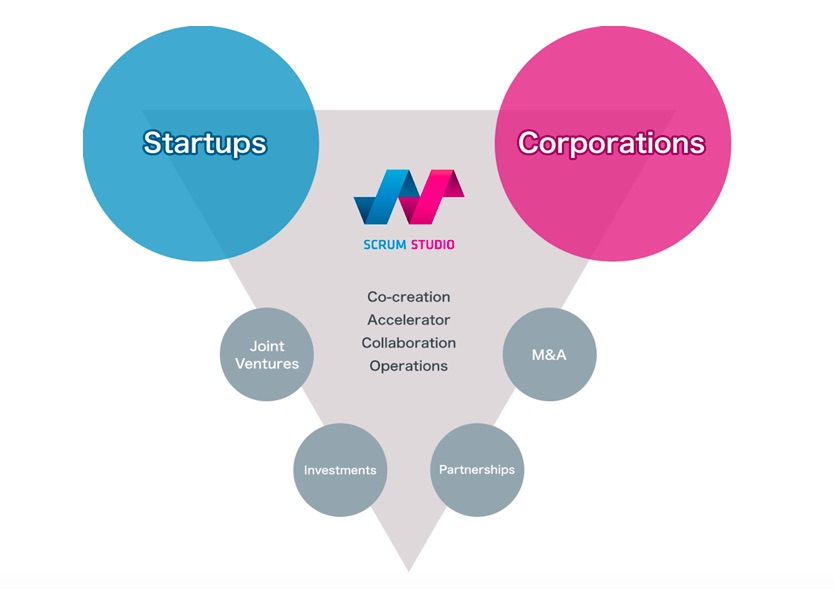
San Francisco-based Scrum Ventures and Dentsu have developed Sports Tech Tokyo, a one-year accelerator program for sports technology companies to provide business opportunities to test marketable products.

Scrum Ventures invests in sports technology for athletes and consumers, including wearable devices, sensors, and virtual reality (VR) technology.

Available from January 2019, the program is seeking applications from startups focused on a wide range of sports-related technologies and will initially select 150 companies to work with.

The use of technology in sport is extensive today. Some thematic applications include coaching and competition analysis, clothing and wearables, science and human performance, media broadcasting and communications, entertainment, e-sports, business and digital transformation, and sporting facility planning and use.

Venture investments in sports startups grew to US$1.5 billion in 2017, according to Deloitte – marking a 50-per-cent increase in two years.

With Japan hosting two major sporting events in the next two years – the 2019 Rugby World Cup and the Tokyo 2020 Olympics and Paralympics – the country hopes to add further value to the sports technology business.

While the Sports Tech initiative is not directly related to Dentsu’s advertising business, the company is exploring ways to manage fan engagement, an area of marketing and that working with companies that develop new technologies for sports fans can garner large amounts of useful data.

Examples as yet unconnected to Sports Tech could include systems enabling micro-sponsorship of sports teams or smart clothing that could send data about an athlete’s movements to insurance providers.

This venture will see Dentsu developing ideas with the start-ups that wish to participate in the programme. The first is technology to help athletes in their training, both physical and mental.

Another area of innovation is to improve the viewing experiences for audiences, which could include innovations in the field of virtual reality and programs to improve technologies at stadiums, such as smart payment systems.

This tech-based sports program will be integrated with many new forms of business models and revenue streams that are in development across the Dentsu Inc portfolio. 


Dentsu Jayme Syfu Greenpeace Dead Whale, Refuse Plastic campaign

The Great Pacific Garbage Patch, also described as the Pacific trash vortex, is a gyre of marine debris particles in the central North Pacific Ocean discovered between 1984 and 1988.

A study this year, based on what researchers called a mega-expedition to the Great Pacific Garbage Patch in 2015 – suggests there is about 16 times more waste than previously thought floating there. The mass of waste spans 617,763 square miles(1.6 million square km), about three times the size of France.

Something has to be done.

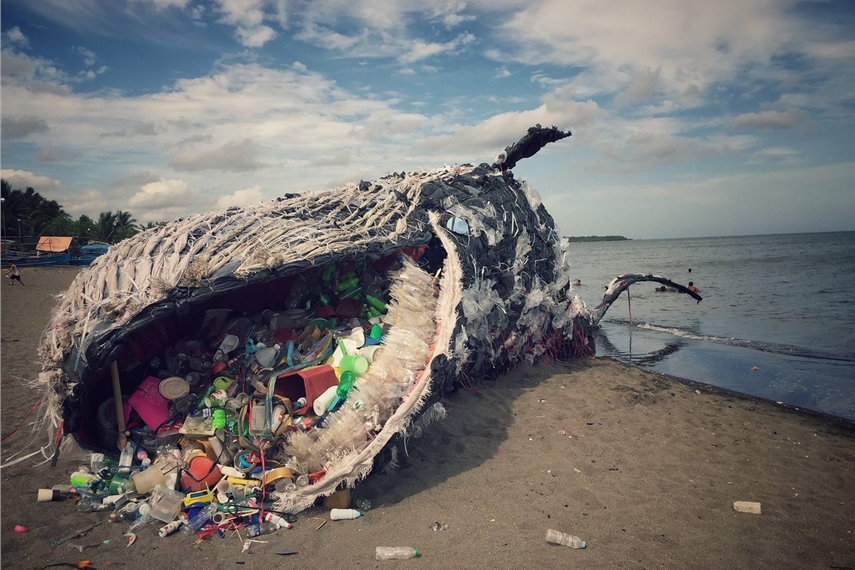
Philippine creative agency, Dentsu Jayme Syfu, put the problem of dumping rubbish in the middle of a Philippine beach.

In just five days, Dentsu Jayme Syfu and a team of local artists created the sculpture of a blue whale stretching 73 feet long.

Starting with a bamboo structure, the group worked to exploit the aesthetic qualities of the plastics they salvaged to make the installation look as realistic as possible, including using plastic bags to simulate the slimy texture of a whale’s decomposing body.

The strikingly unusual awareness campaign for Greenpeace Philippines was an installation – a dead whale made of plastic – placed on a beach in Naic in Cavite in Manila Bay in The Philippines. Manila Bay is considered to be one the most polluted bodies of water in the country.

From a distance, the 26.3 x 3.3 metre whale looked like any of the other 30 whales that had died on beaches in the past year.

But this whale was made entirely of plastic waste. The agency had used local artists to craft every detail, including texture, in just five days. The whale appeared to be bleeding, and spewing out of its mouth were the choking remains of plastic containers, garbage bags and bottles.

All of the whale’s colours were achieved with rubbish. Blue sacks; black, grey, and white garbage bags; red net onion sacks for the “bleeding” sections; twisted white sacks for the underbelly; PET bottles were for the baleen teeth;  black, white and red strings and straw for the skin.

Dead Whale (the Refuse Plastic campaign) has won Best of Show, Green Award, and Platinum Award APAC at the 2018 AME Awards. At the 2018 Cannes Advertising Awards it picked up silver and gold in the art installation category. It won the most awards at Spikes Festival Awards 2017- a Gold Spike in Media, in Outdoor, Silver in PR, Bronze in Design, and Bronze in Direct – and made Dentsu Jayme Syfu Country Agency of the Year. It also won awards at Ad Summit’s Kidlat Awards and Adfest 2018 and is shortlisted for the APAC Effie Awards.

Coca-Cola promotes ‘peace, hope and understanding’ during Trump and Kim Singapore Summit from Dentsu Merdeka LHS Malaysia

It’s about time — literally. If you want to successfully engage today’s impatient consumers, you have to be ready to meet them on their time, with the perfect message for each of their changing needs. Sometime a good way to use time is to captivate your audience with topics the world is talking about and caring about.

On June 12 such a timely and history making moment was taking place, US President Donald Trump and North Korean leader Kim Jong-un met at a summit in Singapore, the first between a North Korean leader and a sitting American president.

To commemorate this timely moment in history, Coca-Cola made limited-edition cans designed by Dentsu Aegis Network Malaysia’s creative agency, Merdeka LHS, with logos written half in English, half in Korean with a message in both languages that reads “Here’s to Peace, Hope and Understanding.

The Dentsu agency then took to the streets to interview people in Singapore on their thoughts and feelings about this historical event. See link on Facebook below;

https://www.facebook.com/plugins/video.php?href=https%3A%2F%2Fwww.facebook.com%2Fcocacolasg%2Fvideos%2F1363835733718663%2F&show_text=0&width=560

The video ends with the song “I’d Like To Teach The World To Sing (In Perfect Harmony)” made popular by Coca-Cola’s 1971 “Hilltop” advertisement. The song is one of Coke’s most famous television campaigns where the brand celebrated multiculturalism, unity, peace and love.

The summit was a perfect platform for the Coke brand to demonstrate one of it’s core beliefs. The idea was to seize the moment to be at the crossroad of an important time in history to spread a brand message of hope and optimism and use Facebook platform to push it out quickly.

For a quick turn around idea to work it all boils down to the client and agency having trust in each other, adding that there should be no layers in the decision making process.